Why a familiar page can fool you after you close the book
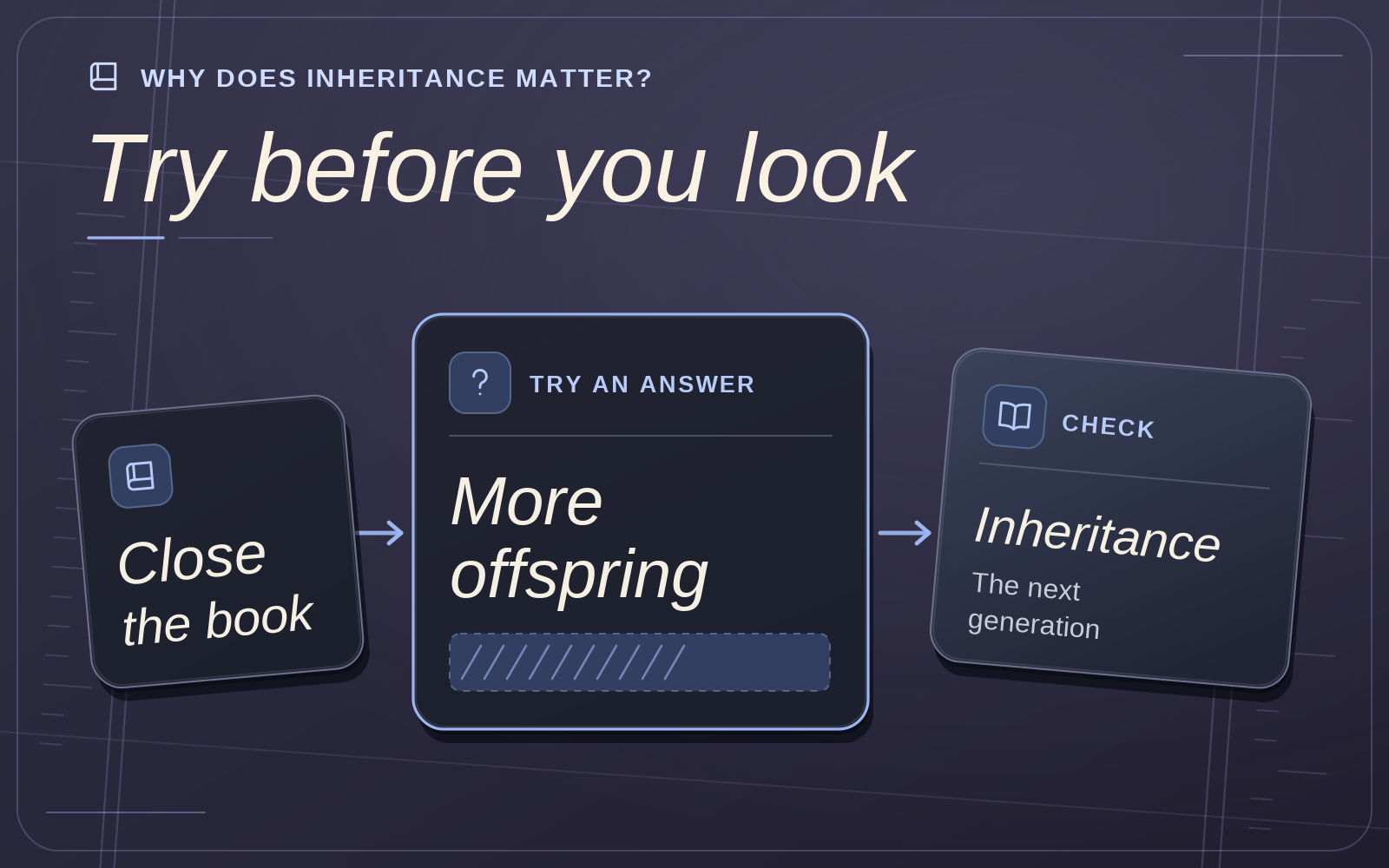
Close the book on a familiar page and see whether you can explain how one thing leads to another without the words in view.
In short
An open page helps you recognise the idea, and it can also supply the connection you would need to explain it alone.
- Close the book and say how one thing leads to another.
- Reopen the page to find what you left out.
On this page
What does a familiar page actually tell you?
Familiarity is the feeling that you’ve seen something before. You open to the passage, spot the heading or an underlined sentence and think you know where the author is going. That is enough if you only need to find the passage. If you want to explain the idea to someone tomorrow, check how much of the explanation is yours to bring back.
Rereading helps when you want to inspect which words the author chose or find a missed condition. It answers that question while the words are available. If the middle of your explanation disappears as soon as you shut the book, you have found a separate job for the next reading.
What did researchers test?
What changes when you close Faraday’s book?
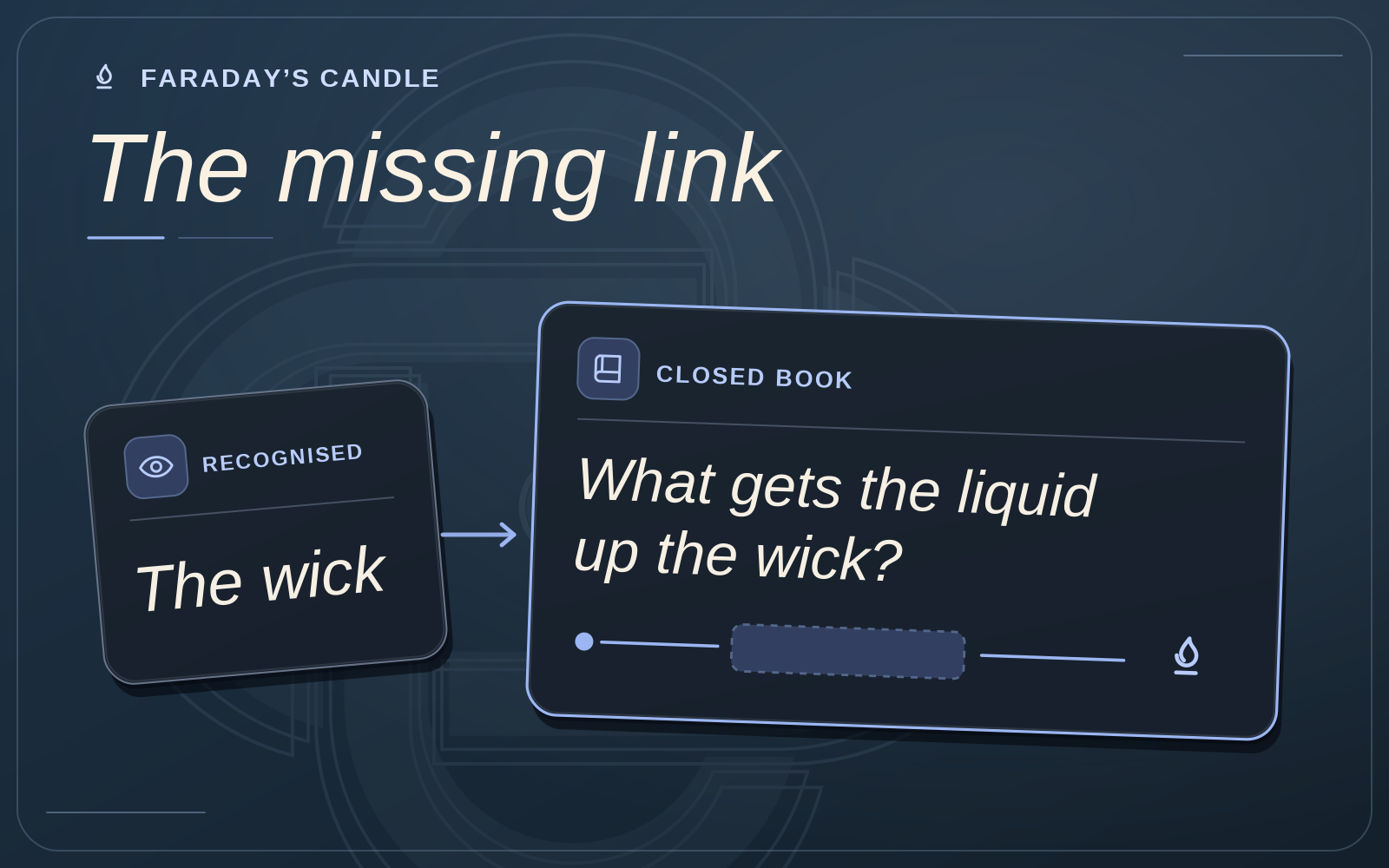
The open and closed page give you two different jobs. In the first lecture of The Chemical History of a Candle, Michael Faraday explains how the wick carries liquid fuel upward. The word “wick” may be all you need to recognise the passage. Close the book and ask how the fuel gets from the solid candle to the flame. Faraday, The Chemical History of a Candle, Lecture I (opens in a new tab).
An attempt might be “there’s a wick in the middle, and that’s where it burns”. The right object is there. The movement is missing. Check the passage and add that the heat melts the fuel and the wick draws the liquid upward. Keep the question “What gets the liquid up the wick?” for a later check. The word you recognised and the connection you rebuilt now have separate places in the note.
How can you check the next book page?
Use one question you can answer in a sentence or two. Choose a paragraph, turn the book over and write what happens, why it happens or what makes the author’s conclusion follow. If you can get only as far as the subject, give the missing link a blank. Reopen the page to fill that blank and keep just enough of a cue to try again later.
The useful discovery may be one missing word or one entire step. Either tells you where to look on your next visit to the page.
Questions readers ask
Should I reread if I can’t answer?
Yes. Look for the part that would complete your answer. Then close the book and try that connection once more.
What if I get the idea right in different words?
Keep your words if they preserve the author’s point. Check that you kept any important exception or condition.
Does a good answer mean I’ll remember it in a month?
A good answer shows what you could bring back this time. Try again after a gap to see what you can still explain.
Sources
Studies and reviews say what was measured. Books and guides are where an example or a method comes from. Videos describe one reader's practice: useful, but not evidence.
Study
A. Koriat and R. A. Bjork (2005). Illusions of competence in monitoring one's knowledge during study. Journal of Experimental Psychology: Learning, Memory, and Cognition.
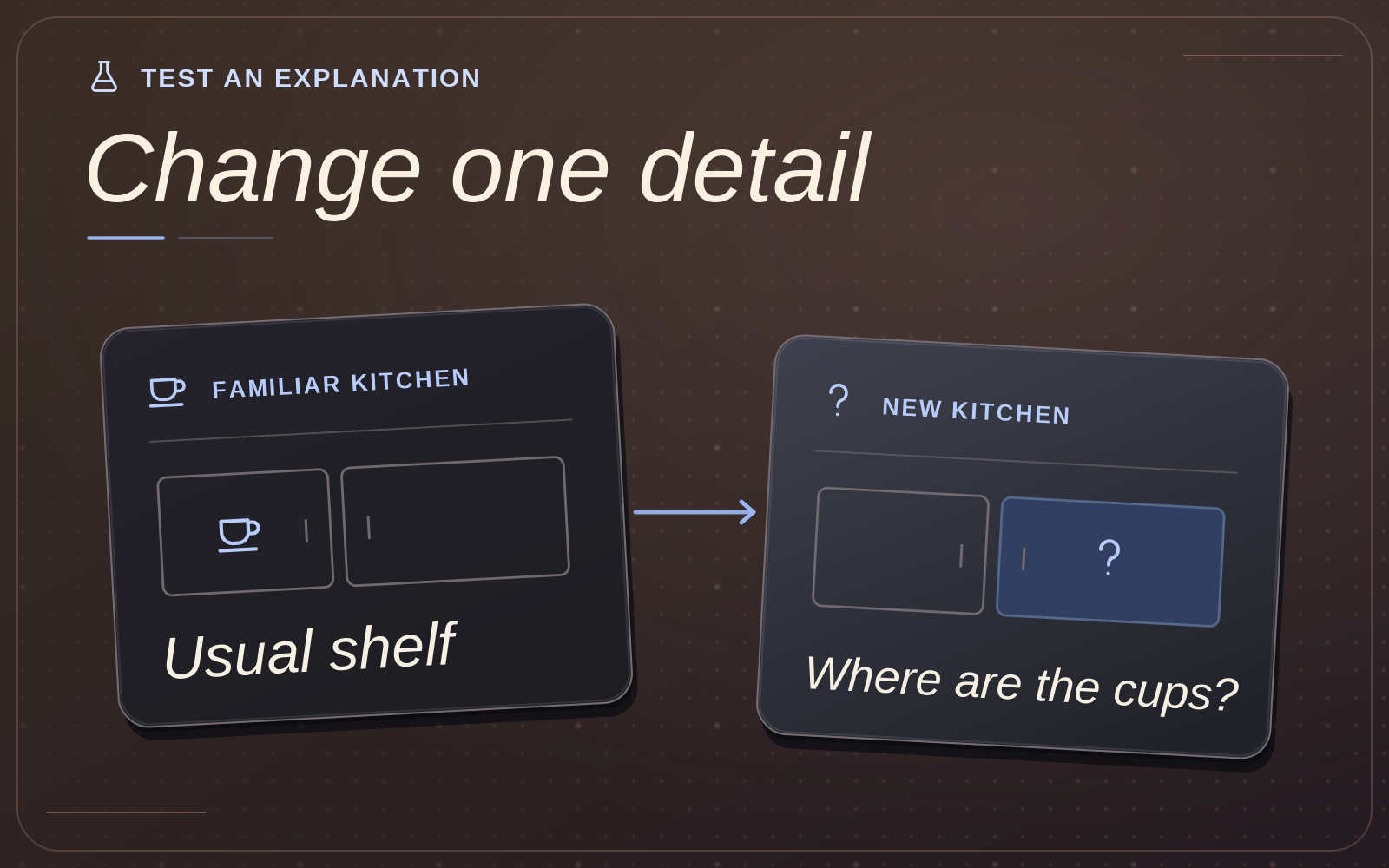
Word-pair experiments comparing predicted with actual cued recall. Experiment 2 tested 20 undergraduates on pairs shown in the stronger or weaker direction of association. Full text read 21 November 2026.
Read the study (opens in a new tab)Study
H. L. Roediger III and J. D. Karpicke (2006). Test-enhanced learning: taking memory tests improves long-term retention. Psychological Science.
Two experiments measured recall of short prose passages in Washington University undergraduates after different delays. Experiment 2 also asked students to predict their recall a week later. Full text read 21 November 2026.
Read the study (opens in a new tab)Book
Michael Faraday (1908). The Chemical History of a Candle, Lecture I. Wikisource.
The Lecture I passage used for the example, in the Wikisource transcription of the 1908 edition. Read 21 November 2026.
See the book (opens in a new tab)
Read this with your AI
Opens a new chat with the address of this article and a question ready to send.