Can you explain the reason behind the sentence you just summarised?
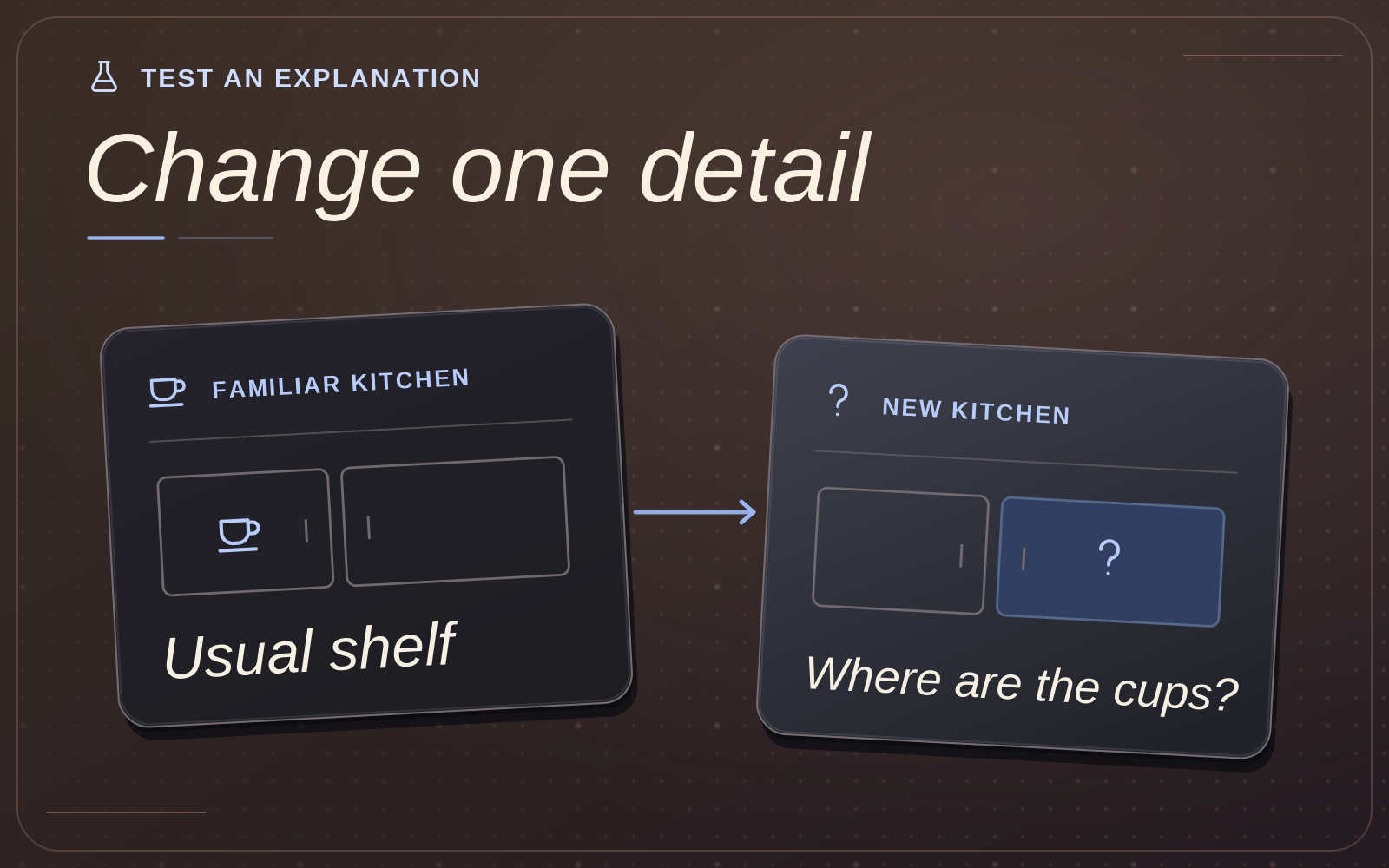
Turn a summary of a passage into an explanation by naming the reason that links two details, then check it against the text.
In short
A summary says what a passage covers.
- A self-explanation makes a reason or connection explicit while you are learning.
- When a sentence in your notes sounds clear but has no reason in it, ask why one detail follows from another and test the answer against the passage.
On this page
What is self-explanation while reading?
Self-explanation is the work of making a connection or a reason clear to yourself as you read. You can explain how an example supports a claim, why one step comes after another or how a new point fits something you already know. Dunlosky and colleagues review self-explanation as one of ten learning techniques. Dunlosky and colleagues, 2013, section 2 (opens in a new tab)
You have written “dividing the work made the workshop productive” in the margin. Someone asks how. You point at the same sentence. The note gives you a summary to begin with. The explanation starts when you ask what dividing the work changed.
Why can a clean summary leave a gap?
A clean summary can preserve a claim while leaving out how the passage gets there. It is a useful way to record what you read. For a hard point, add one sentence that has to connect two details. If the connection will not come, name the gap and read the relevant lines again.
Try this on the first chapter of Adam Smith’s The Wealth of Nations (1776). Smith describes a workshop where making a pin is divided into about eighteen distinct operations, and reports that ten workers there could make upwards of forty-eight thousand pins in a day. Adam Smith, The Wealth of Nations, Book I, chapter 1 (opens in a new tab).
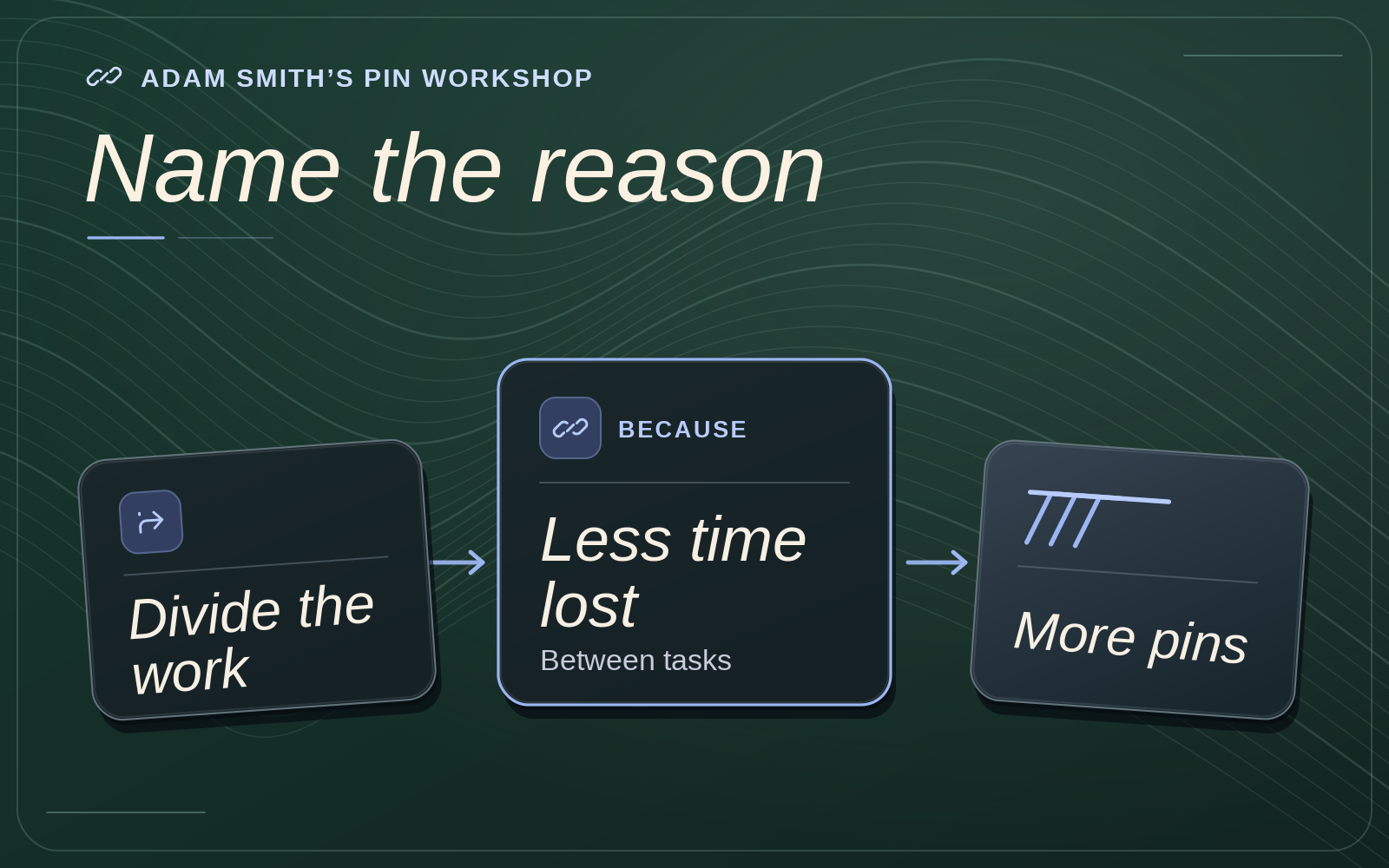
A summary might read: “Dividing the work made the workshop far more productive.” It records what Smith reports. Ask how splitting one job into many lets the same people make more. Later in the chapter Smith names three circumstances: each worker grows more dexterous at one task, nobody loses the time spent moving from one kind of work to another, and machines that let one person do the work of many, which he traces back to the division of labour. Your explanation needs at least one of them, in your own words.
How do you spot a reason you added yourself?
Check each part of your explanation against the passage. A sentence can go further than the information allows even if it sounds convincing. Suppose you write, “The workshop made more pins because the workers were better paid.” The chapter does not give pay as a reason for the extra work. A better explanation keeps to the circumstances Smith names and keeps pay as a question.
| If your note says | Try asking |
|---|---|
| “This is about making pins.” | What does dividing the work let each worker do? |
| “The work is split into about eighteen operations.” | Why does that let the same ten people make more? |
| “They made more because they were paid more.” | Which line names pay as a reason? |
| “I still don’t see where the machines come from.” | Where does Smith connect the machines to the division of labour? |
A reason you can check is worth more than a fluent guess. Keep your guess as a question when the author has left it open.
What has research tested?
Researchers have tested prompts to explain while people learn, including while they read a science text.
The circulation experiment gives a reason to try a prompt on a tricky passage. It leaves open how often to stop in a full-length book and how the practice will serve what you want to do with it later.
What should you try on your next page?
Choose one place where you can repeat the point but cannot say why it follows. Put the connection in one sentence. Reopen the page and decide which part you can support, which part was your own inference and whether you want to leave a question.
Questions readers ask
Do I have to explain every sentence?
No. Try it when a step matters and the reason is hard to see. Read straight through when that suits the book and your purpose.
Is self-explanation the same as retrieval practice?
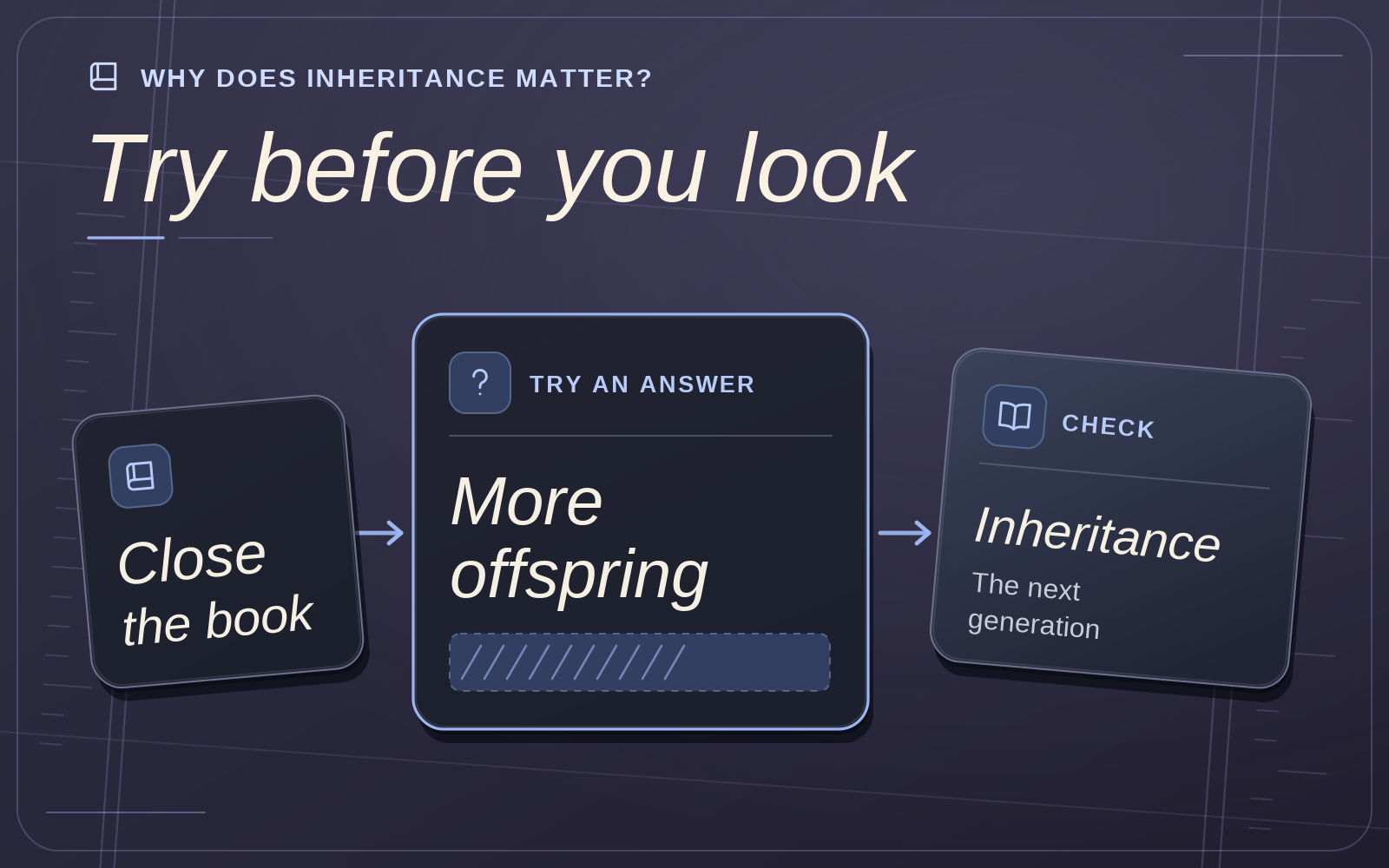
The two can go together. Self-explanation asks you to make a reason or connection clear, possibly with the book open. Retrieval practice asks you to try bringing an answer to mind before you look.
Can I explain something to someone else?
Yes. A listener can tell you where they lose the thread. You can also explain to yourself and use the text to see what you left out.
Sources
Studies and reviews say what was measured. Books and guides are where an example or a method comes from. Videos describe one reader's practice: useful, but not evidence.
Study
M. T. H. Chi and colleagues (1994). Eliciting self-explanations improves understanding. Cognitive Science.
Experiment with eighth graders, 14 prompted to explain each line of a text on the circulatory system and 10 who read it twice, tested before and after. Abstract read 21 November 2026.
Read the study (opens in a new tab)Review
J. Dunlosky and colleagues (2013). Improving students' learning with effective learning techniques: promising directions from cognitive and educational psychology. Psychological Science in the Public Interest.
Review of ten learning techniques, including self-explanation, across learners, materials and outcomes. Abstract read 21 November 2026.
Read the review (opens in a new tab)Book
Adam Smith (1776). The Wealth of Nations, Book I, chapter 1, Of the Division of Labour. Wikisource.
The chapter passage used for the worked example (the pin workshop and the three circumstances). Read 21 November 2026.
See the book (opens in a new tab)
Read this with your AI
Opens a new chat with the address of this article and a question ready to send.