How many book notes do you need before you can stop?
Start with one useful note and use a stopping rule to decide what else is worth keeping.
In short
Start with one book note you can name a use for.
- Add another when it helps you find a different passage, records a different question or tells you something else you want to try.
- Stop when what you have is enough to find, explain or use what you came to the book for.
On this page
What do you want a note to do?
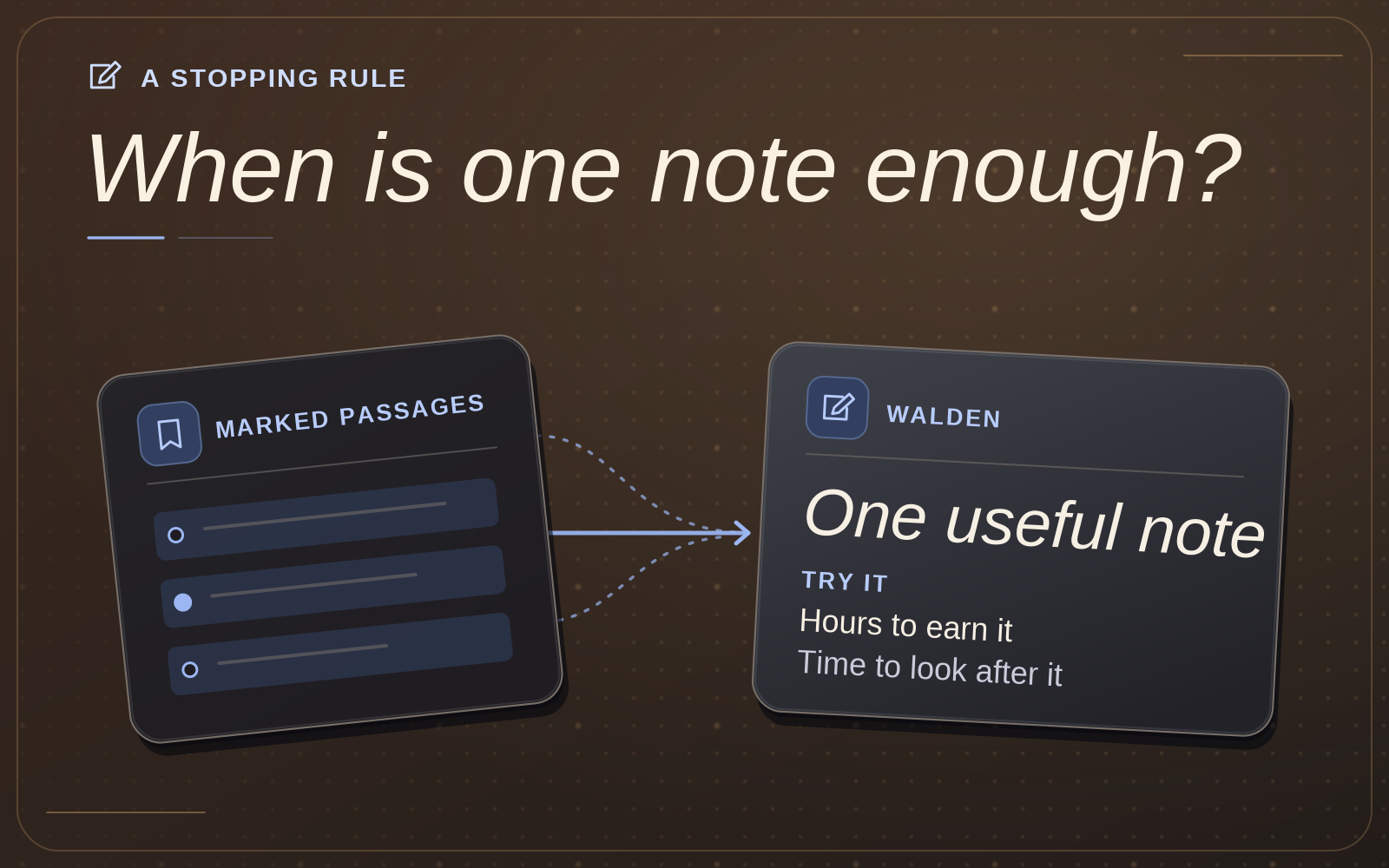
Pick a job for the note before deciding how many to take. You close a book with six marked passages and one thing you want to try. Which note would help you actually try it?
Imagine the next time you will use the book. If you are preparing for a discussion, a claim and the page that made you question it might be enough. If you want to try a technique, keep the steps and the conditions that make it suitable.
The Royal Literary Fund advises students to select material for the assignment at hand and keep page numbers for later. Cal Newport describes putting project notes with the work they will serve. Both give you a way to choose what to keep by asking what it is for. Royal Literary Fund (opens in a new tab), Cal Newport at 12:40 (opens in a new tab).
What belongs in the first note?
Write the thought you came away with and what gives you a reason to keep it.
Pause at the end of a section. Close the book and ask what you would want to tell someone about it. Write the main point you have in mind, then add the reason that makes it useful or the question it leaves open. Reopen the book and check whether you captured the author’s point. You can add a short source pointer if you want to find it again.
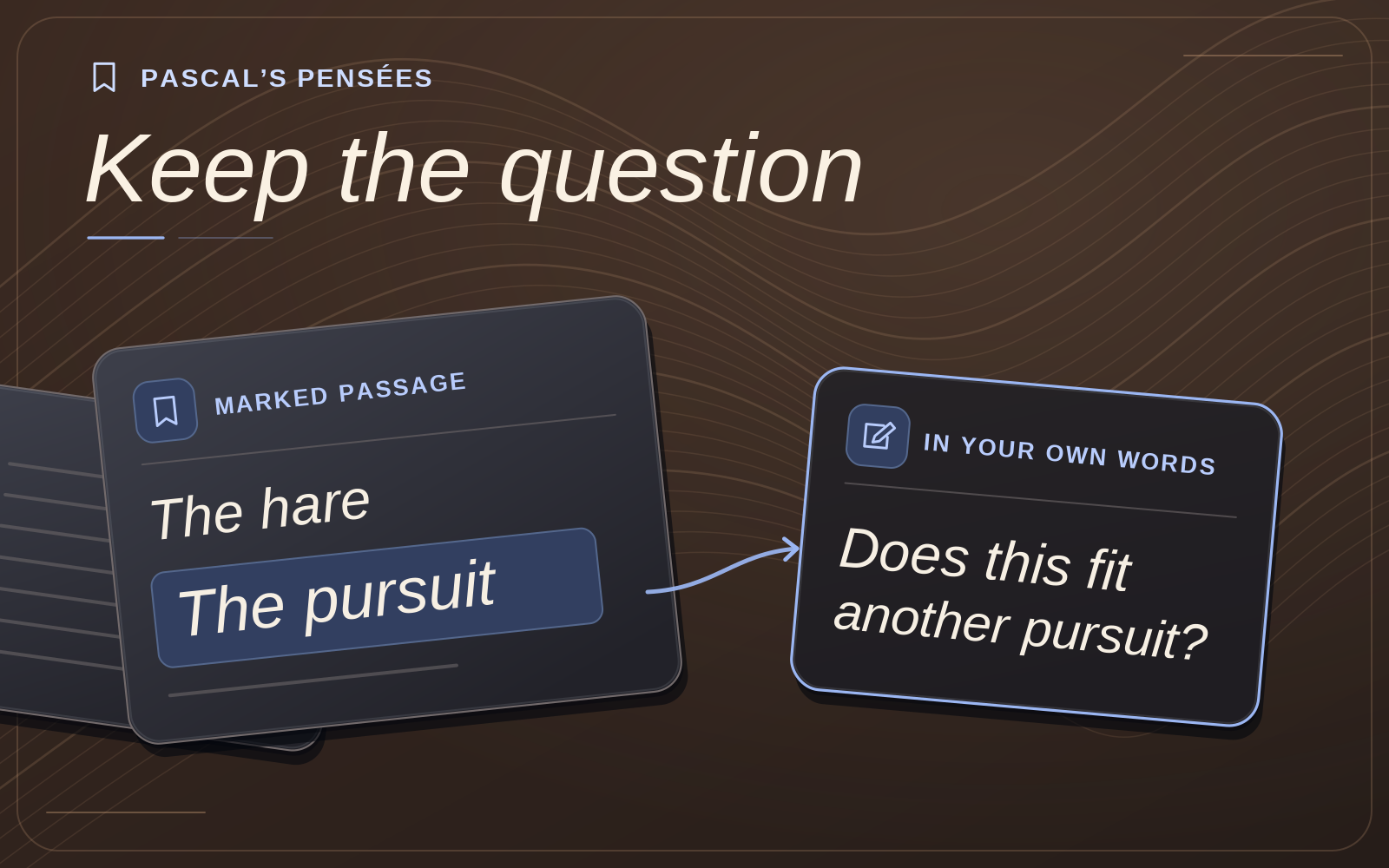
A mark can be enough for a passage whose exact wording matters. A note you want to use on its own needs enough context to be clear later. Vicky Zhao’s guide to the Zettelkasten method puts one idea in each permanent note and describes writing it so it makes sense without the original context. A short account of how a chapter is organized can keep several related points together. Vicky Zhao at 03:06 (opens in a new tab).
How can the same passage leave different notes?
The note depends on what you want to do with the passage.
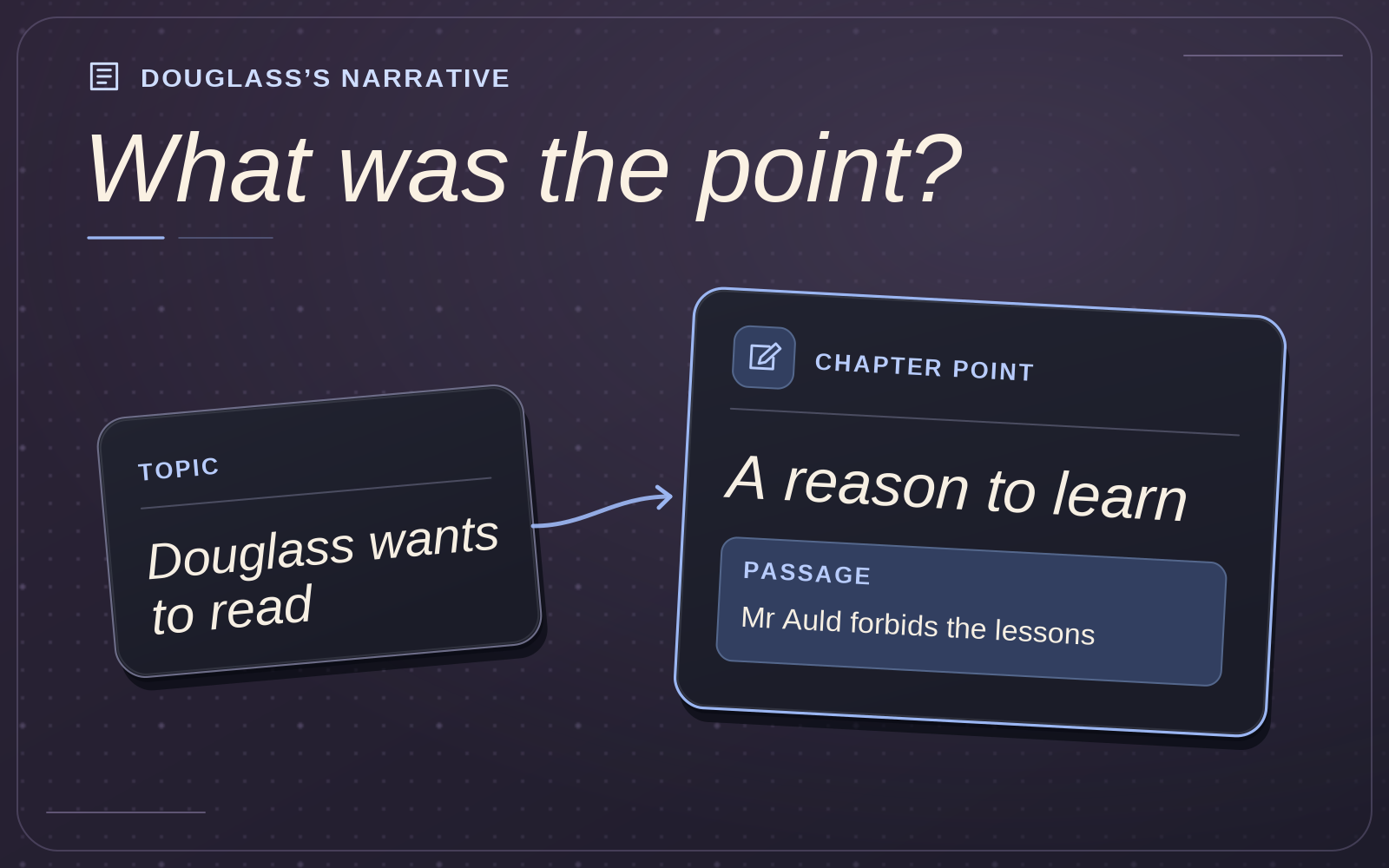
In “Economy”, the opening chapter of Walden, Henry David Thoreau weighs the cost of a dwelling in how much life a person exchanges for it. The passage might leave you with a claim to understand, a purchase to think through or a question you would like to discuss. Henry David Thoreau, Walden (1854), “Economy” (opens in a new tab).
| Why you read the passage | What you might keep |
|---|---|
| You want to understand the argument. | One note. Thoreau asks what a dwelling costs in the life it takes to obtain and keep it. Add the passage as a source. |
| You want to try the idea. | Keep the source and one action. For something you are considering buying, write down both the hours it takes to earn the price and the time it will take to look after. This is an exercise of your own. |
| You are leading a discussion. | Keep the source and a question. What would this way of counting tell you about a more expensive place that saves commuting time? |
The planning reader has two things to keep because the source and the next action do different work. Another example of the same action can stay in the book.
When do you have enough?
Stop when you can find, explain or use the material you came for.
- If you want to find something, make sure the chapter, page or section will let you get back to it.
- If you want to explain something, see if the note gives you a clear claim and a reason you can follow.
- If you want to use something, name the situation where you would try it and any condition that matters.
When you finish the book, skim the notes for the chapters that served your purpose. If two notes now say the same thing, keep the clearer one and preserve any source pointer you might need. You can return to the book if a new question comes up.
Is there a tested number to aim for?
The sources give ways to choose what to keep. They give no tested quota for a nonfiction book. A single note can answer the question you came with, and a page reference can help when you come back with another.
If you are reading out of curiosity and nothing calls for a note, turn the page.
Questions readers ask
Should I take at least one note per chapter?
Take one when the chapter gives you something you want to keep. If it develops a point you already recorded, add a source pointer to the earlier note or carry on reading.
Is one note enough for a whole book?
Yes, if one idea is what you want from it. Give that idea enough detail to make sense when you come back to it.
How long should a book note be?
A page number can be enough for a lookup. For a stand-alone idea, use enough words to recover the claim and why it matters. A note about a difficult argument may need more room.
What if I miss a useful passage?
Go back when you have a reason. A project or discussion can give you a more specific question and make it easier to choose what to keep.
Sources
Studies and reviews say what was measured. Books and guides are where an example or a method comes from. Videos describe one reader's practice: useful, but not evidence.
Guide
Royal Literary Fund (2014). Taking notes. Royal Literary Fund.
Guidance on choosing material for an assignment and preserving page references. Archived guide read 21 November 2026.
Read the guide (opens in a new tab)Book
Henry David Thoreau (1854). Walden, “Economy”. Wikisource.
The passage used for the example. Read 21 November 2026.
See the book (opens in a new tab)Video
Cal Newport (2024). A Productivity System To Remember Everything You Learn & Get Ahead In Life. YouTube.
Project-note placement. Captions at 12:40 read 21 November 2026. A practice, not a study.
Watch the part (opens in a new tab)Video
Vicky Zhao (2021). Zettelkasten Method Explained: A Beginner's Guide. YouTube.
Stand-alone permanent ideas. Captions at 03:06 read 21 November 2026. A practice, not a study.
Watch the part (opens in a new tab)
Read this with your AI
Opens a new chat with the address of this article and a question ready to send.