What to do when a highlight no longer tells you why you stopped
Turn a marked passage into a note that keeps the reason you stopped or the question you want to pursue.
In short
Highlight a passage when you want to find it again or keep its exact wording.
- Add a note in your own words when you want to save what you think it means or keep a question it raised.
- If you want to check what you remember, try to explain it with the book closed, then reopen the passage to check your account.
On this page
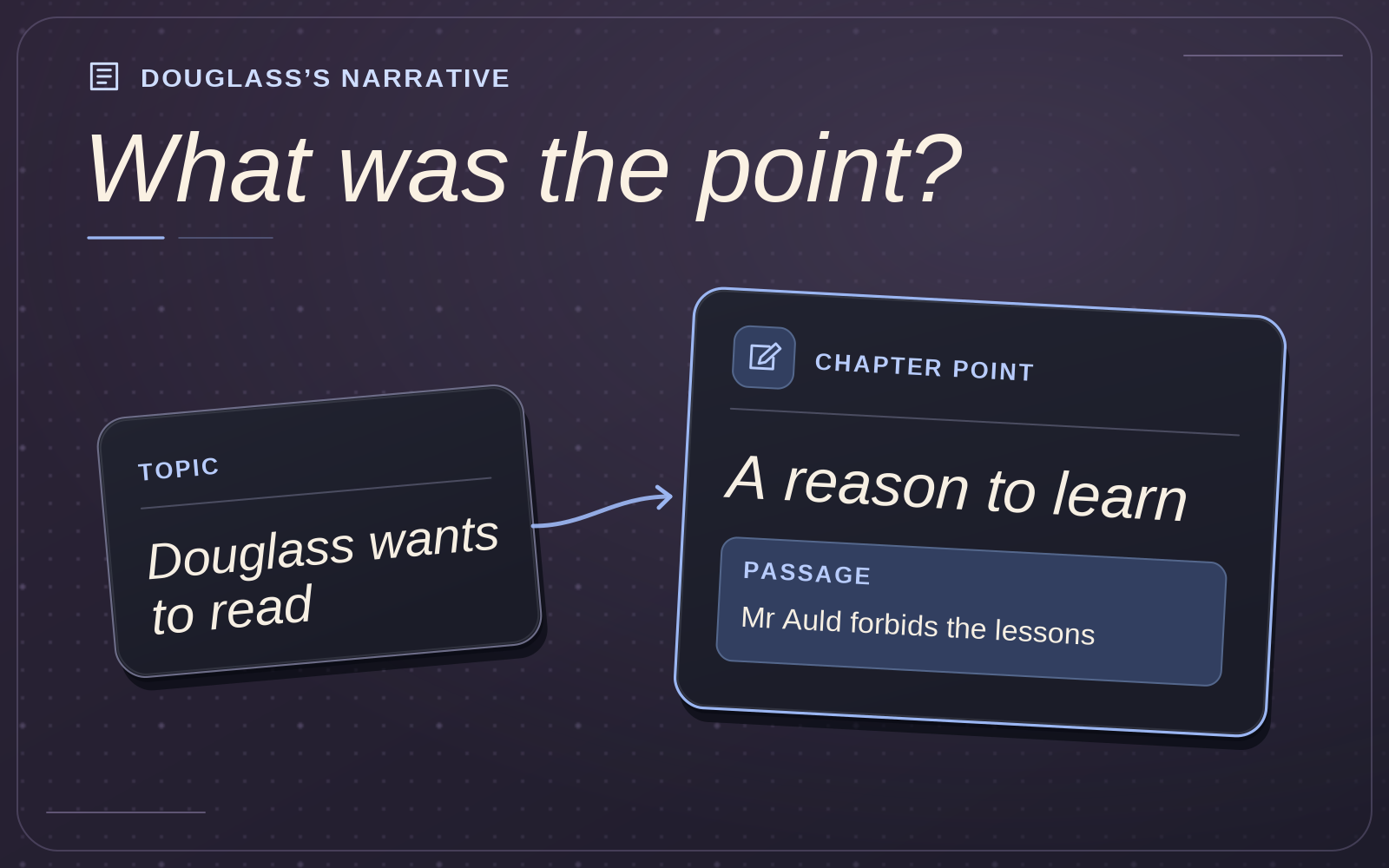
You open the book to a page you marked last month. The sentence still looks important. What did you want from it? A month later, your question may tell you more about why you stopped.
What can a highlight do?
A mark gives you a way back to a sentence, example or qualification. Mark enough to make the passage useful on a second visit. If a sentence ends with a condition that changes the claim, include it.
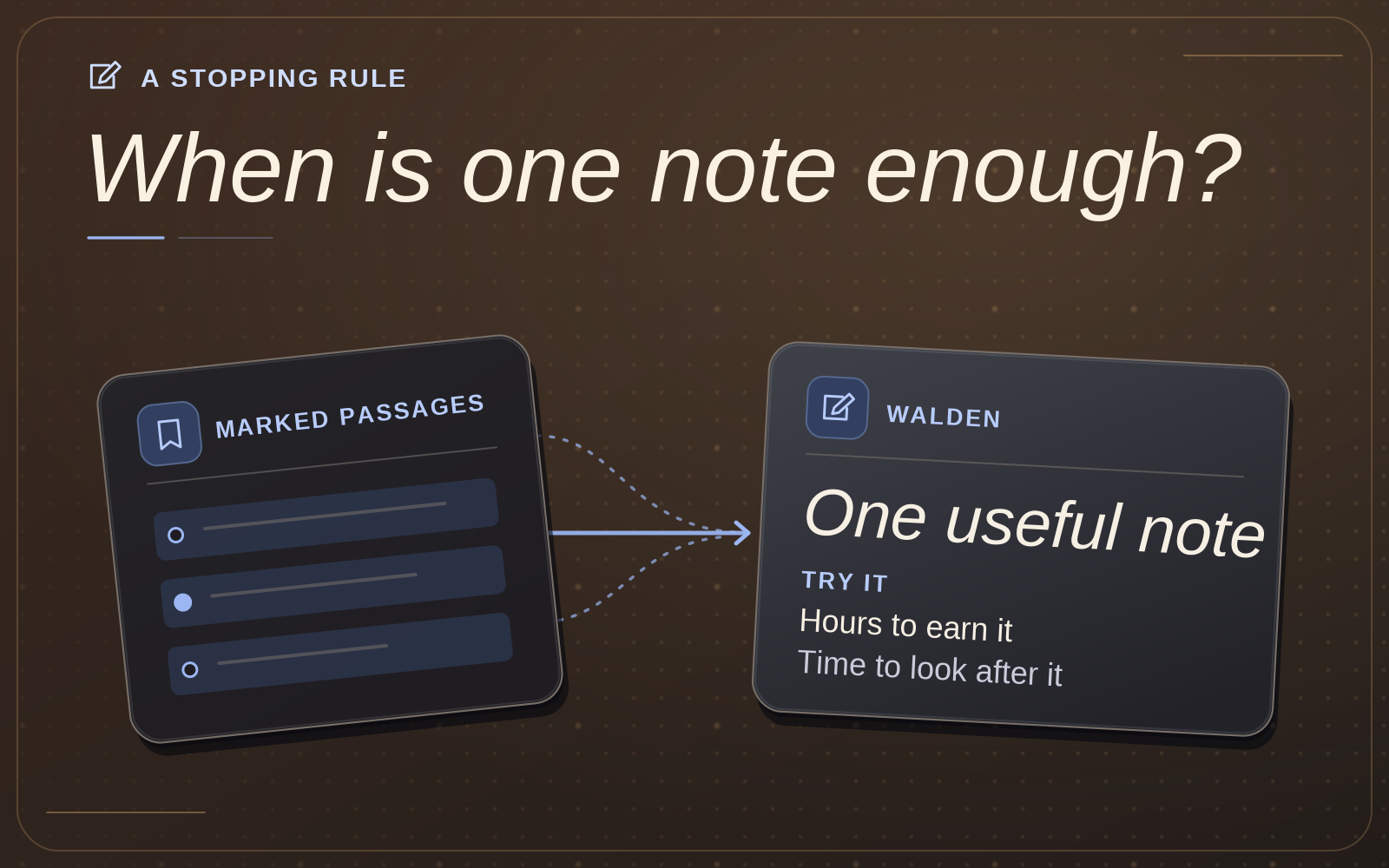
Cal Newport describes marking the corner of a page and then marking the passage on it. One mark helps him find the page and the other tells him where to look. You can do the same with a bookmark and a pencil, or with a location and a highlight in an ebook. Cal Newport, 07:37 (opens in a new tab).
How do you turn a highlight into a note?
Add a note when a passage answers a question you had, leaves you unconvinced or makes another idea easier to explain. Put your own interpretation beside it. If you do not understand why a claim follows, write that as a question while you still know where the trouble starts.
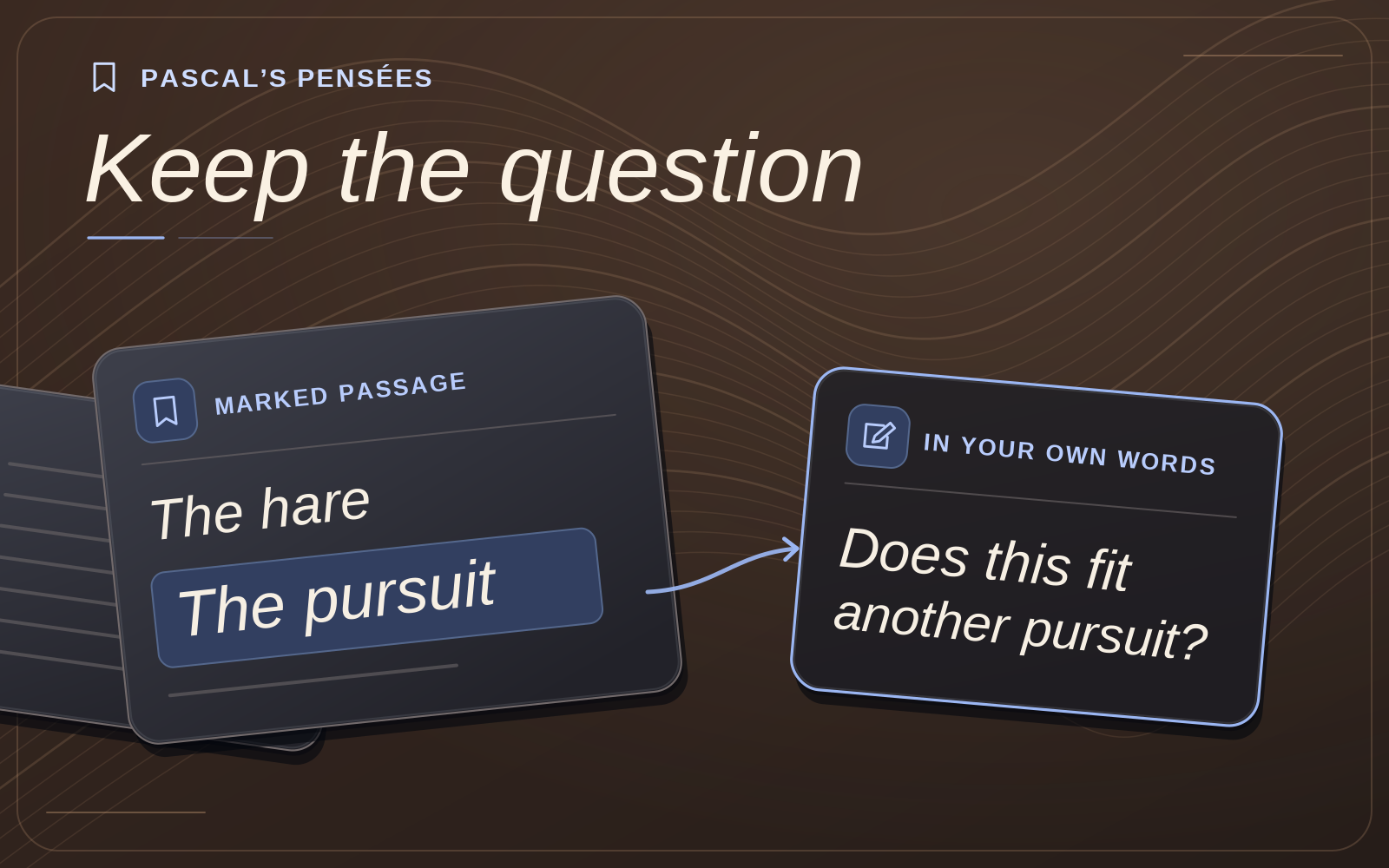
In fragment 139 of Pensées, Blaise Pascal considers why someone spends the day chasing a hare they would not have bought. Mark the example and his explanation of what a pursuit can do for the person pursuing it. Pascal, Pensées, fragment 139 (opens in a new tab).
A note you could keep: Pascal uses the hunt to argue that the chase matters more than the hare because it turns the hunter’s mind away from death and trouble. My question is whether the same account would fit a pursuit I enjoy for its own sake.
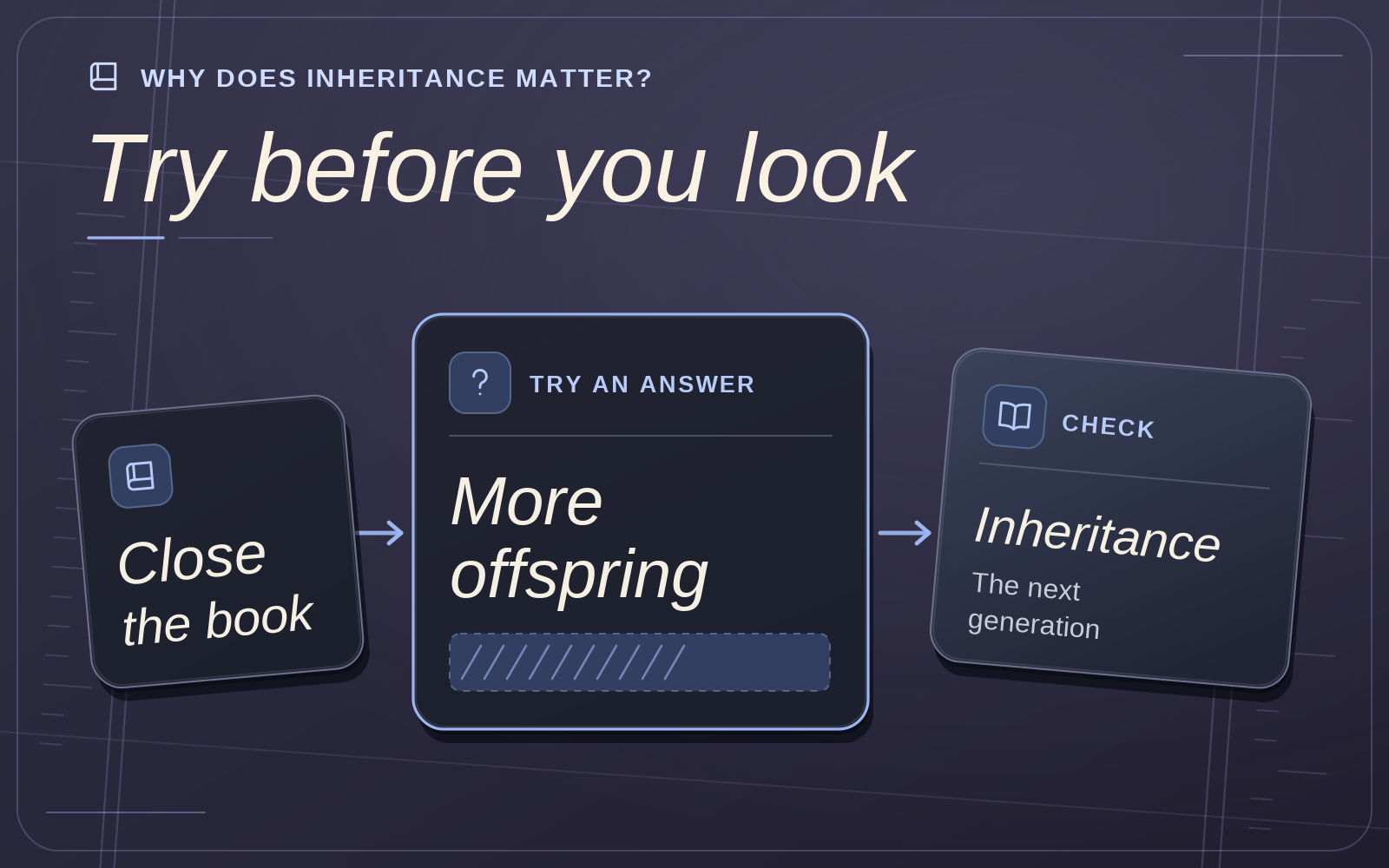
Try explaining that distinction with the book closed. Reopen it to check what Pascal proposes and where your own question begins. The mark keeps the words within reach. The question tells you what you want to think through.
| What you want later | What to keep now |
|---|---|
| The author’s precise wording | The marked passage, with its location |
| Your understanding of the claim | A sentence in your own words, checked against the passage |
| A question to bring to a discussion | The question and the smallest passage that makes it clear |
| An idea to practise remembering | A question you can answer before opening the note |
When should you keep the original wording?
Keep the exact words when the wording matters to your question. On p. 24 of How to Take Smart Notes, Sönke Ahrens separates a selective account of what you read from the thought you later develop. For the passage in Pensées, keep the exact words if you expect to need them. Then give your own question its own line. When you return, you will be able to tell what came from the book and what you brought to it. Ahrens’s book page (opens in a new tab).
Does highlighting help you remember?
Highlighting can help with some memory tests. Results depend on who marks what and what a test asks.
A mark can still serve as a pointer to the page, and a closed-book explanation gives you something specific to check against it.
This synthesis compares different ways of highlighting text under study conditions. It gives no direct comparison with your own notebook.
It is useful to keep the overall result and the narrower finding together.
What is still uncertain
The studies say more about questions on an assigned text than about what happens when you return to your own notes a month later. Keeping a mark to find a passage and posing a question to practise explaining it are two different jobs. Choose the step that serves the job you have.
Before you close the book, check whether you need the words, your thought or both. Keep the smallest thing that will help when you open it again.
Questions readers ask
Can I highlight and take notes in the same book?
Yes. Mark the passage where you want to find it. Add your interpretation or question only when you have one worth keeping.
Should I copy every highlight into my notes?
Start with an idea or quotation you can name a use for. If all you want is the location, the existing highlight may be enough.
What if taking notes interrupts my reading?
Make a quick mark and keep going. Revisit the marked places at a chapter break if you still have something to say about them.
When should I keep the author's exact words?
Keep the original words when the wording itself matters. Mark them as a quotation and keep the source. Write your reading of it separately.
Sources
Studies and reviews say what was measured. Books and guides are where an example or a method comes from. Videos describe one reader's practice: useful, but not evidence.
Review
J. Dunlosky and colleagues (2013). Improving students' learning with effective learning techniques: promising directions from cognitive and educational psychology. Psychological Science in the Public Interest.
Review of learning techniques across educational studies, learner groups and outcomes. Full text read 21 November 2026.
Read the review (opens in a new tab)Review
H. R. Ponce and colleagues (2022). Effects of learner-generated highlighting and instructor-provided highlighting on learning from text: a meta-analysis. Educational Psychology Review.
Meta-analysis of memory and comprehension outcomes among learners studying text. Abstract read 21 November 2026.
Read the review (opens in a new tab)Study
L. Mason and colleagues (2024). Highlighting and highlighted information in text comprehension and learning from digital reading. Journal of Computer Assisted Learning.
Original experiment on digital highlighting and comprehension. Abstract read 21 November 2026.
Read the study (opens in a new tab)Book
Blaise Pascal. Pensées, translated by W. F. Trotter, fragment 139. Project Gutenberg.
The passage used for the example. Read 21 November 2026.
See the book (opens in a new tab)Book
Sönke Ahrens (2017). How to Take Smart Notes. CreateSpace.
Opening excerpt, including printed p. 24, read 21 November 2026.
See the book (opens in a new tab)Video
Cal Newport (2024). A Productivity System To Remember Everything You Learn & Get Ahead In Life. YouTube.
Practitioner demonstration of two-step page marking. Captions at 07:37 read 21 November 2026. A practice, not a study.
Watch the part (opens in a new tab)
Read this with your AI
Opens a new chat with the address of this article and a question ready to send.