The personal development trap
How can I use an idea from a book once I finish reading?
In short
Rob Swagten calls it the personal development trap when the satisfaction of finishing a book takes the place of trying an idea you meant to use.
- Pick one idea, explain why it might help and try it at a moment you can name.
- Afterwards, write down what you did and what you learned.
On this page
Imagine you finish a good book on Sunday and fold the corner of a page you want to come back to. A decision comes up on Thursday. Only afterwards do you think of the passage.
This is for the moment you put a finger on a page and thought, I want to try that.
Why can the next book feel like the next step?
Rob Swagten, the maker of Pensaya, calls it the personal development trap when the satisfaction of finishing a book takes the place of trying an idea you meant to use. The chance to try something from a book, such as asking a different question in a conversation, may be days off.
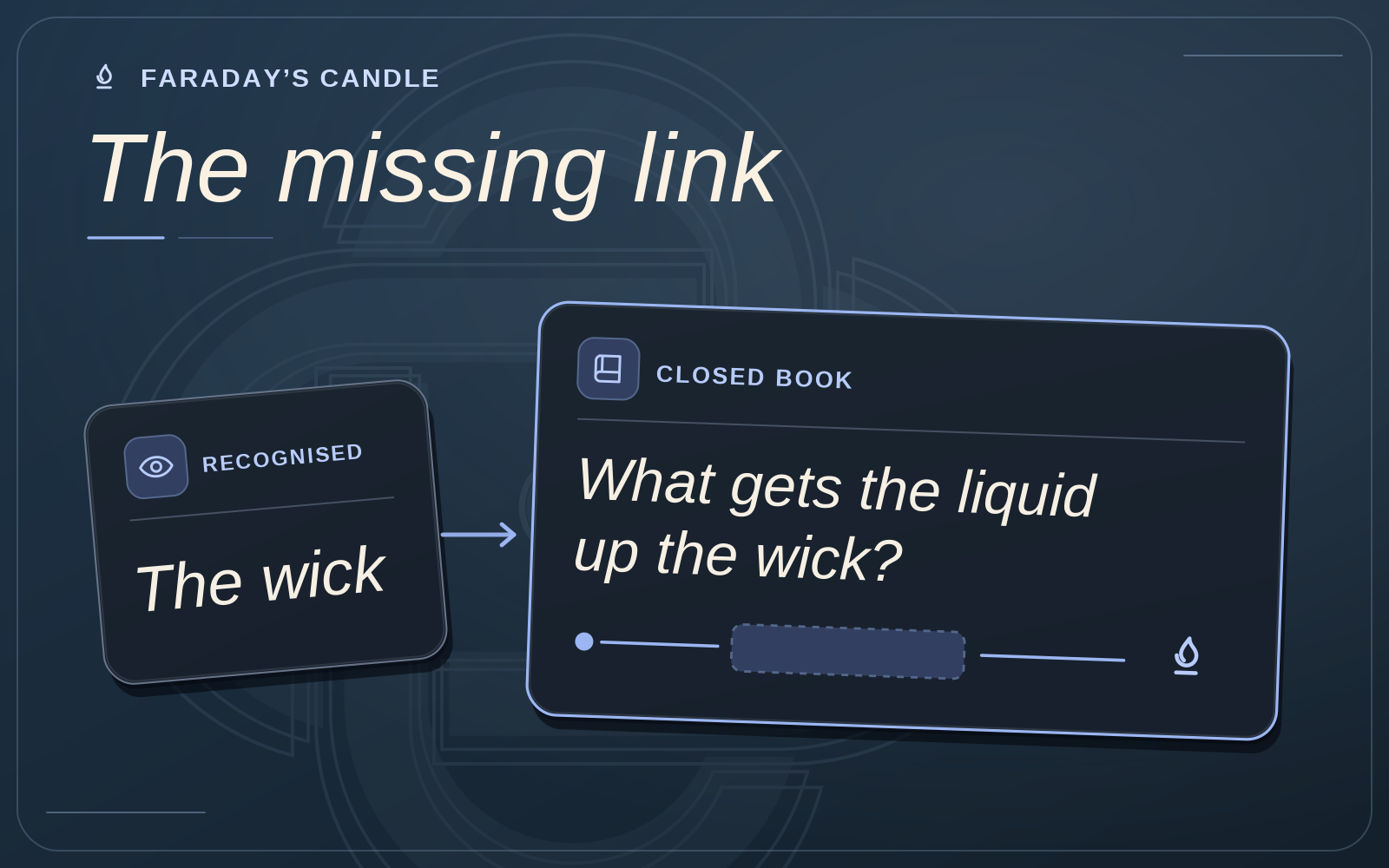
On the open page, you might have the author’s example and the reason beside it. Close the book and see if you can explain how the two fit together.
In an experiment by Asher Koriat and Robert Bjork, undergraduates studied word pairs and predicted whether they could supply the second word when shown the first alone. When the first word was a weak cue for the second, students predicted more recall than they achieved. Their predictions were close for pairs shown in the stronger direction. The researchers suggest that seeing both words may have made the pair seem more closely related than the first word alone would suggest. Koriat and Bjork, 2005, experiment 2 (opens in a new tab).
Henry Roediger and Jeffrey Karpicke gave undergraduates short passages to study. In their second experiment, students who only restudied expected to remember more a week later than students who practised recall. The restudy group remembered more on the five-minute test than the group that practised recall three times. On the one-week test, the pattern reversed. Both tests counted points that students could bring back from a passage. Roediger and Karpicke, 2006, experiment 2 (opens in a new tab).
How do you give one book idea a chance to work?
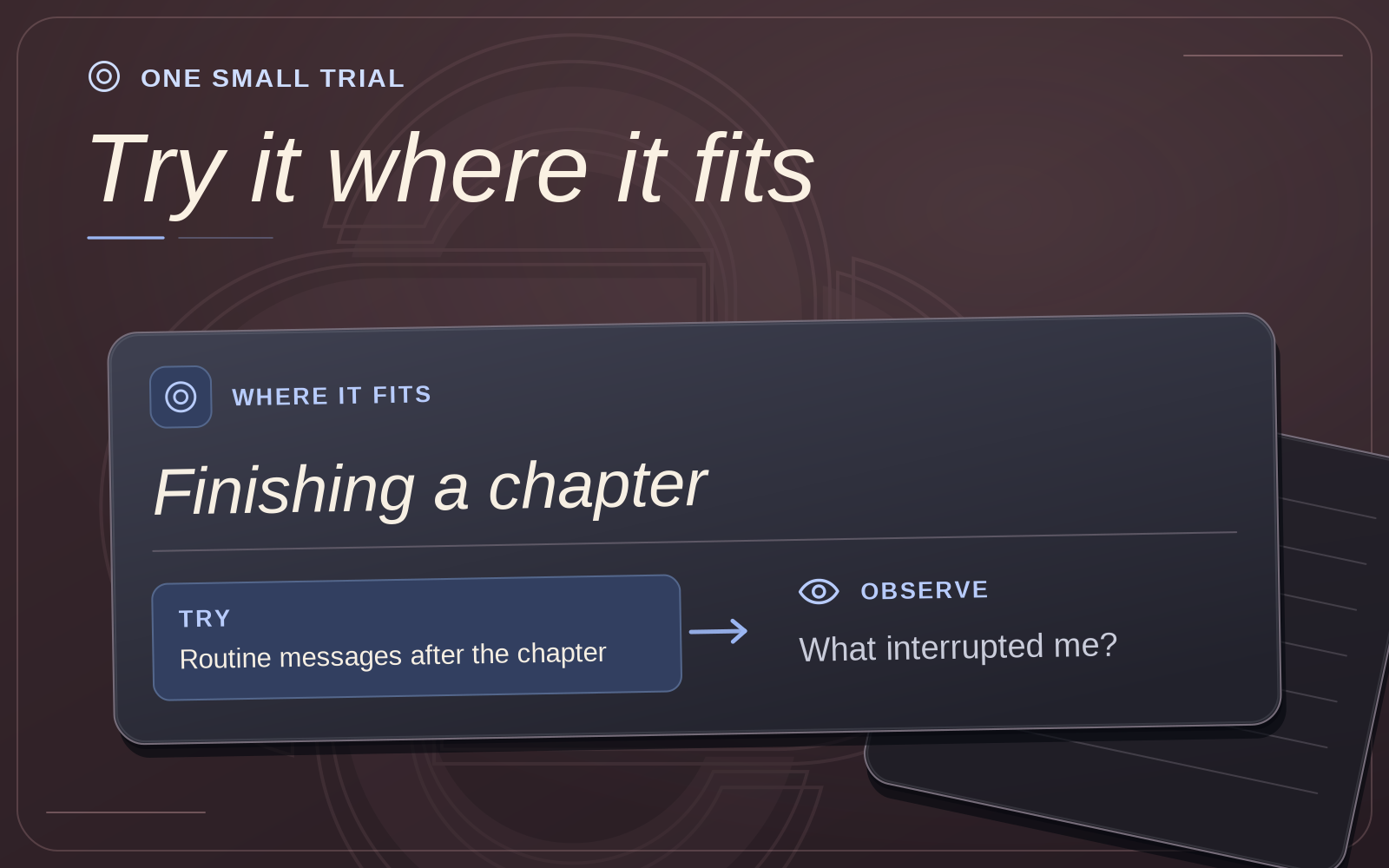
Start with one idea that might matter to something you expect to do. A note at the place you stopped is enough to begin.
- Note it down. Put the idea in a sentence of your own and keep the chapter or page beside it. Write what drew your attention so you can see why you kept the note.
- Work it out. Close the book. Try to explain the idea, the reason behind it and one example. If your answer stops partway through, reopen the page and look for the missing part. Leave yourself a question you can try again after a gap.
- Use it. Pick one conversation, task or decision already ahead of you. Name what you’ll try. Afterwards, record what happened and whether it changed anything. If the moment passed before you thought of the idea, leave a cue for next time.
“Ask for one reason I haven’t heard before the group votes” gives you an action to take at a specific moment.
What does this look like with a real book?
In chapter II of On Liberty, John Stuart Mill argues that understanding the grounds for your own judgment means engaging with the strongest reasons on the other side. He asks readers to hear those reasons from people who genuinely hold the view, where possible. Before you decide, find out what someone on the other side sees that you might have missed. Mill, 1859, chapter II (opens in a new tab).
Imagine your book club is deciding whether to discuss a whole book once a month or a chapter each week. You favour shorter readings because members would have more chances to join the discussion.
| When | What you do |
|---|---|
| When you finish the chapter | Write a first pass in your own words. “Before deciding, hear the other side.” Add the chapter so you can find the passage again. |
| A few days later | With the book shut, ask why Mill wants you to hear the other side. You remember that another view might reveal a flaw in yours. Reopen the chapter and add the condition you missed. Hear the case in the form its own supporters would defend. |
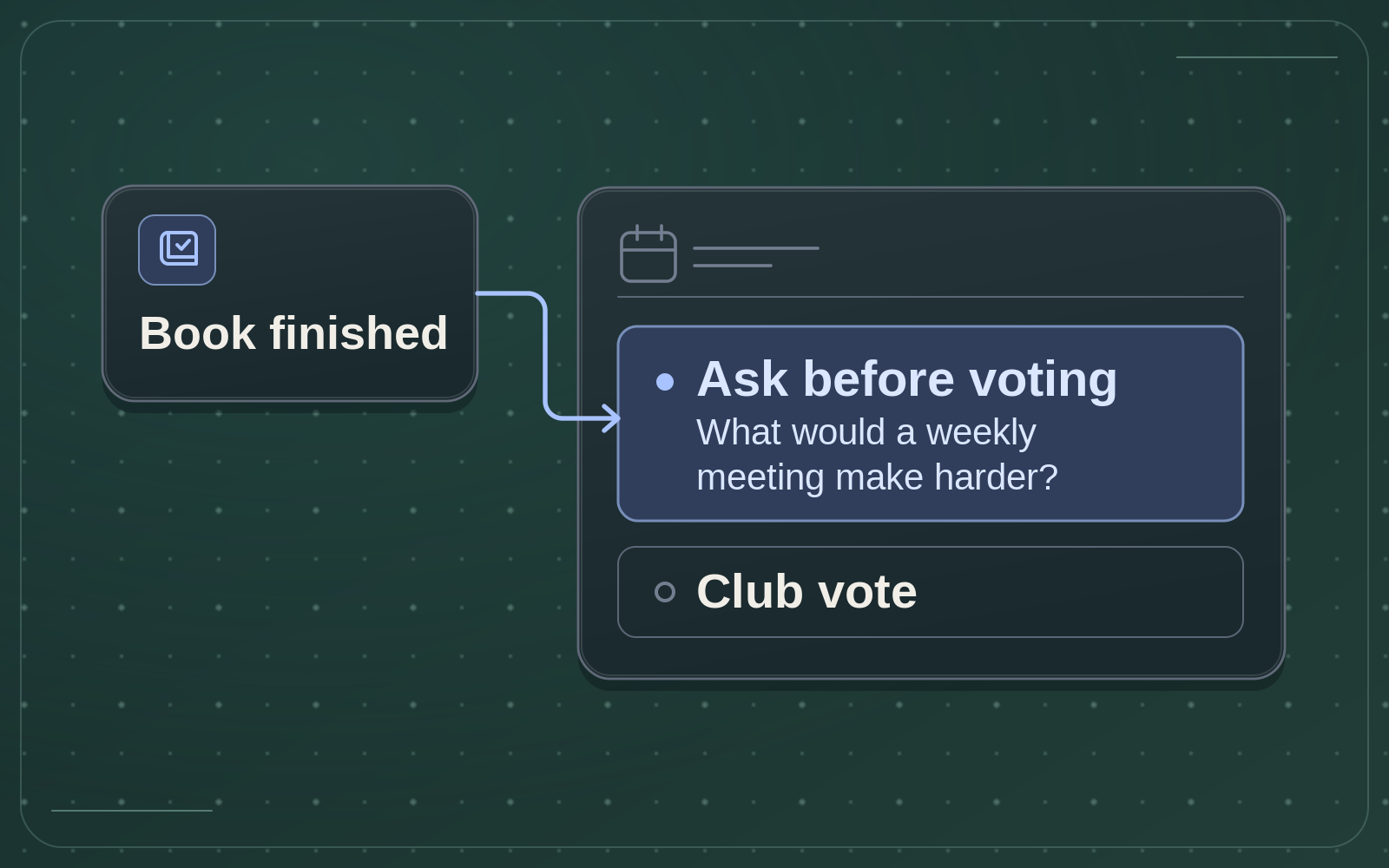
| Before the club votes | Ask a member who prefers the monthly meeting what a weekly format would make harder. Listen to their reason. Say it back in your own words and ask whether you got it right before you make your case. |
| After the meeting | Write one line about the objection you heard and what it changed in your reasoning. If you still prefer weekly meetings, can you say why given that objection? |
You might assume people prefer a longer discussion. Asking could reveal that a weekly commitment makes it harder to come at all. That answer gives you a concrete trade-off to weigh before you vote.
What can the research tell you about using an idea?
A study can give someone a new question and see whether they apply an idea to it. A week after reading short passages, students in an experiment by Gerdien van Eersel and colleagues answered more questions about new topics correctly after practising recall of related information with feedback than after rereading alone. The gap was smaller when the rereading included short statements with the same information as the feedback. Van Eersel and colleagues, 2016, experiment 2 (opens in a new tab).
The researchers supplied the questions. At the book club, you have to notice the chance to ask one. Put a few words in the agenda or on the note you take to the meeting.
What should you do after your next chapter?
Pick one idea you wanted to try and write down where it could matter. You can use a notebook and set a calendar reminder. In Pensaya, you can explain an idea from a book, connect it to something you know and ask your own question. Book notes are free. Your first three explained ideas are free too, and each has one free return. With Premium, the ideas you keep can come back again, and the gaps can grow when you recall an idea straight away. When an idea comes back, try explaining it from memory. Then look at your note.
Try the idea in the situation you picked. Afterwards, write down where you tried it, what you did and what you’d do the next time.
Questions readers ask
What if I remember the words but can’t explain the idea?
Go back to the part where the author gives a reason. Write the idea and that reason in separate sentences. Then think of one case where the reason would matter.
What if I can’t see a place to use the idea yet?
Keep the page and write what would have to come up for the idea to matter. Let that condition tell you when to look again.
What if I’m reading just because I enjoy it?
Enjoy the book. Use the exercise when a passage gives you something you want to think through or try.
Sources
Studies and reviews say what was measured. Books and guides are where an example or a method comes from. Videos describe one reader's practice: useful, but not evidence.
Study
Asher Koriat and Robert A. Bjork (March 2005). Illusions of Competence in Monitoring One’s Knowledge During Study.
Experiment 2 checked 22 November 2026.
Authors’ lab copy (opens in a new tab)Study
Henry L. Roediger III and Jeffrey D. Karpicke (March 2006). Test-Enhanced Learning: Taking Memory Tests Improves Long-Term Retention.
Experiment 2 checked 22 November 2026.
Author’s lab copy (opens in a new tab)Study
Gerdien G. van Eersel, Peter P. J. L. Verkoeijen, Migle Povilenaite and Remy Rikers (26 December 2016). The Testing Effect and Far Transfer: The Role of Exposure to Key Information.
Experiment 2 checked 22 November 2026.
Original journal article (opens in a new tab)Book
John Stuart Mill (1859). On Liberty.
Chapter II, “Of the Liberty of Thought and Discussion”. Passage on hearing the other side checked 22 November 2026.
Chapter II on Wikisource (opens in a new tab)
Read this with your AI
Opens a new chat with the address of this article and a question ready to send.