How to remember what you read when you have ten minutes
What can I do to remember what I read in ten minutes?
In short
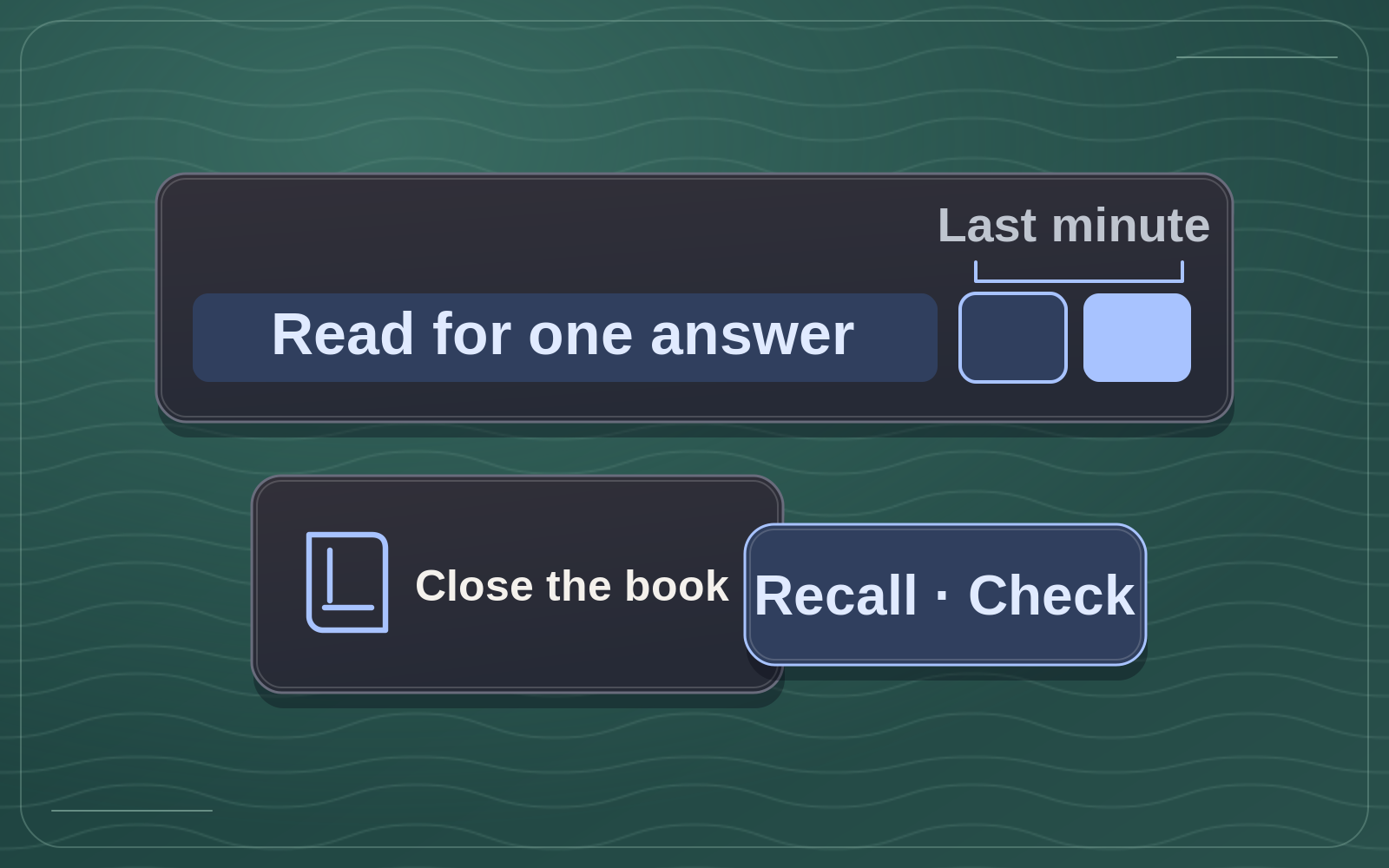
Use ten minutes to read far enough for one point to make sense.
- While you read, look for an answer to one question.
- With a minute left, close the book and write what you can recall for thirty seconds.
- Use the last thirty seconds to check the passage and mark where to start next time.
On this page
Give yourself one thing to look for
When you have a short reading window, open to a small section and use its heading or first paragraph to give yourself a question. “Why is she proposing this?” works for an argument. “What changed here?” works for a sequence of events. If the book takes you somewhere different, revise the question as you go.
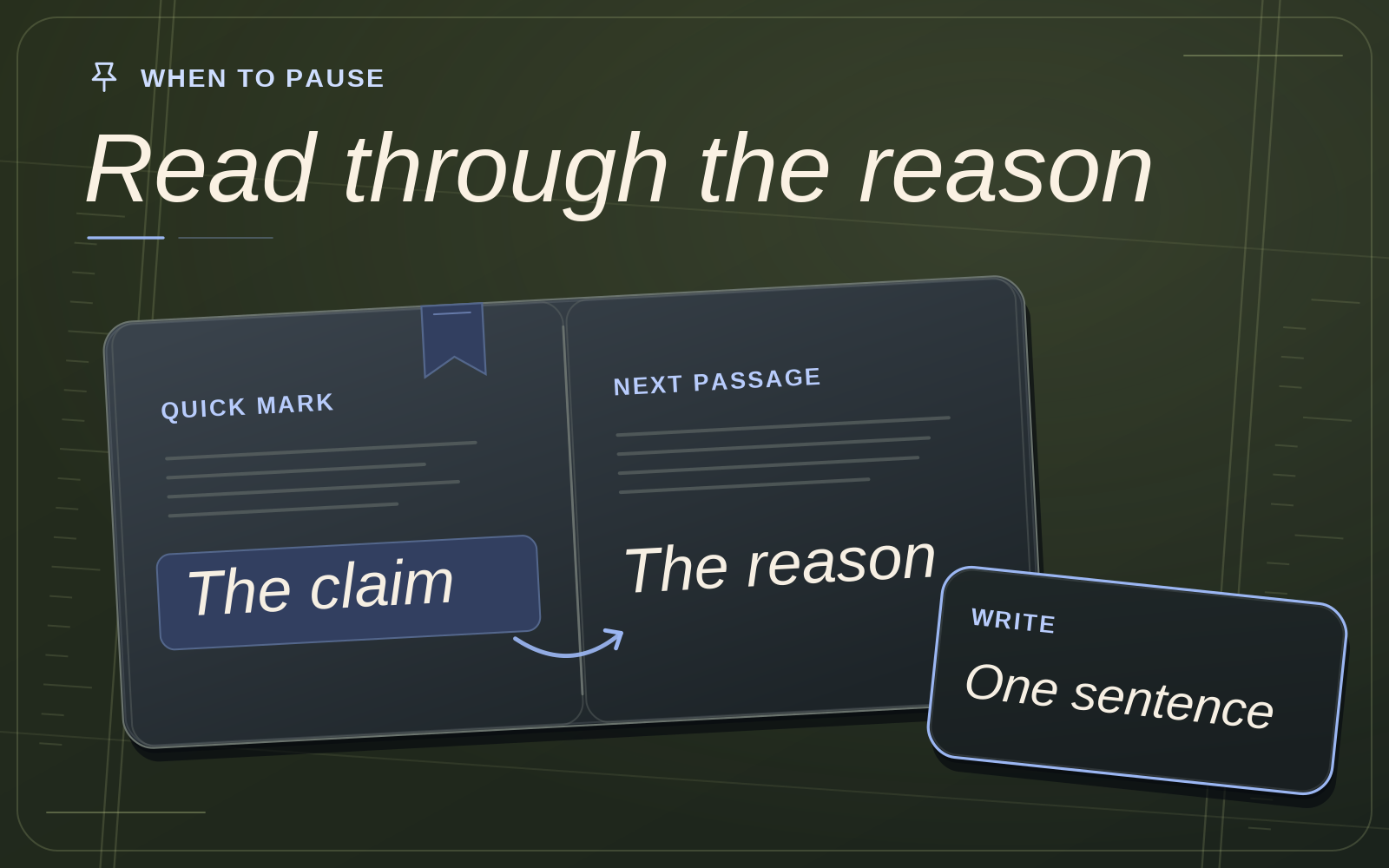
Keep reading until you reach a claim and a reason, or a useful piece of the answer. Hold your place with a finger or a bookmark when you set the book down. You can finish the chapter next time.
Leave the last minute for a closed-book check
For thirty seconds, write a rough answer from memory. For the next thirty, open to the passage and check one part. Add your next starting point beside the answer. You can write a chapter heading and three words from the paragraph if page numbers are hard to track.
If you have only a fragment by the time you stop, keep it as a question. “What reason does the author give for this proposal?” tells you where to pick up. The next session can begin with the same question.
What can fit into ten minutes with one book?
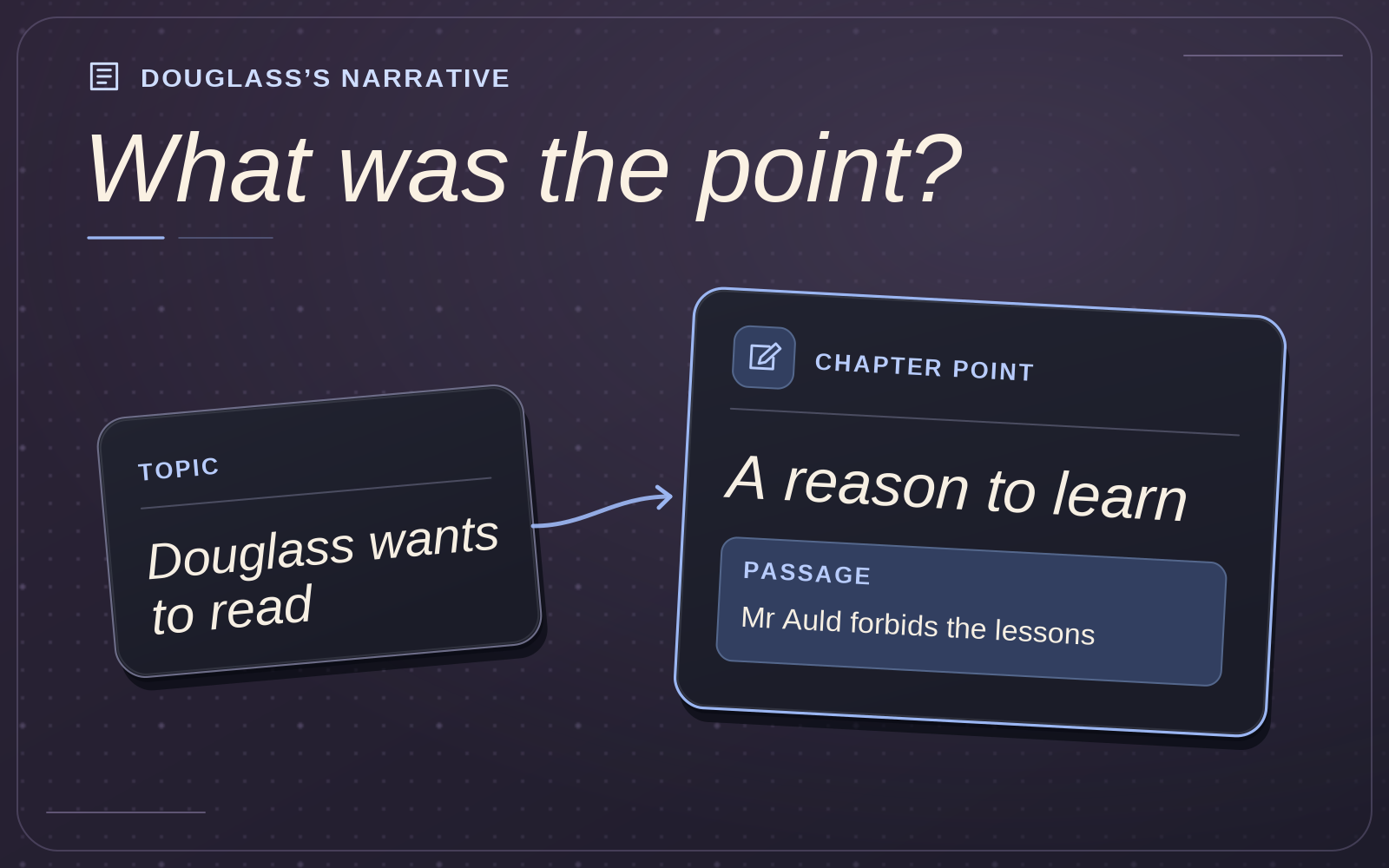
Open chapter XII of Mary Wollstonecraft’s A Vindication of the Rights of Woman. Part of her proposal is for girls and boys to learn together in public schools. She links shared education to the kind of fellowship she wants between women and men. Start where she describes the habits children develop when they are educated apart and read on for her reason for bringing them together. Wollstonecraft, chapter XII, “On National Education” (opens in a new tab).
| Time | What you do |
|---|---|
| First minute | Give yourself a question. “Why does Wollstonecraft want girls and boys to study together?” |
| Next eight minutes | Read far enough to find one reason. Notice when she moves from her proposal for schools to how men and women might relate to each other. |
| Thirty seconds with the book closed | Write what you can recall. “She wants them to learn together so they can get used to dealing with one another as companions.” |
| Last thirty seconds | Check the passage. Add “public schools” to your note so you can find and explain that part of her proposal. Leave a marker at the next paragraph. |
The note gives you one part of her case to pick up later. The chapter has more to say about what a shared education could look like.
Why leave time to check what you recall?
Mark McDaniel, Daniel Howard and Gilles Einstein compared several ways college students studied short passages. In their first experiment, students who read, recalled and then reread brought back more of the passages on a free-recall test than students who read twice, with or without taking notes. The advantage showed up both immediately and a week later. The groups could take as long as they wanted to read. The thirty-second attempt here is a way to fit the read, recall and check sequence into your own time. McDaniel, Howard and Einstein, 2009, experiment 1 (opens in a new tab).
Try it tonight in five minutes
- First thirty seconds. Choose one short section in the nonfiction book you have open. Write a question its heading or opening suggests.
- Next three and a half minutes. Read with that question in mind. Stop after the first usable part of an answer, even if more of the section remains.
- Next thirty seconds. Close the book and write the answer, or the part you can recall.
- Last thirty seconds. Check one detail and mark where you’ll continue. If the passage has yet to answer your question, write what you’re still looking for beside the marker.
You can leave that line on the bookmark. In Pensaya, you can keep a book note and work through one idea in your own words. If you use the app, your note can start with the one point you were able to check.
If a second book gives you another part of the answer, put two book notes together around the same question.
Questions readers ask
What if I’m in the middle of an argument when time runs out?
Write a short question about the link you’re waiting for. “How does the next example support the claim?” gives you a place to start after a break.
What do I do with yesterday’s note?
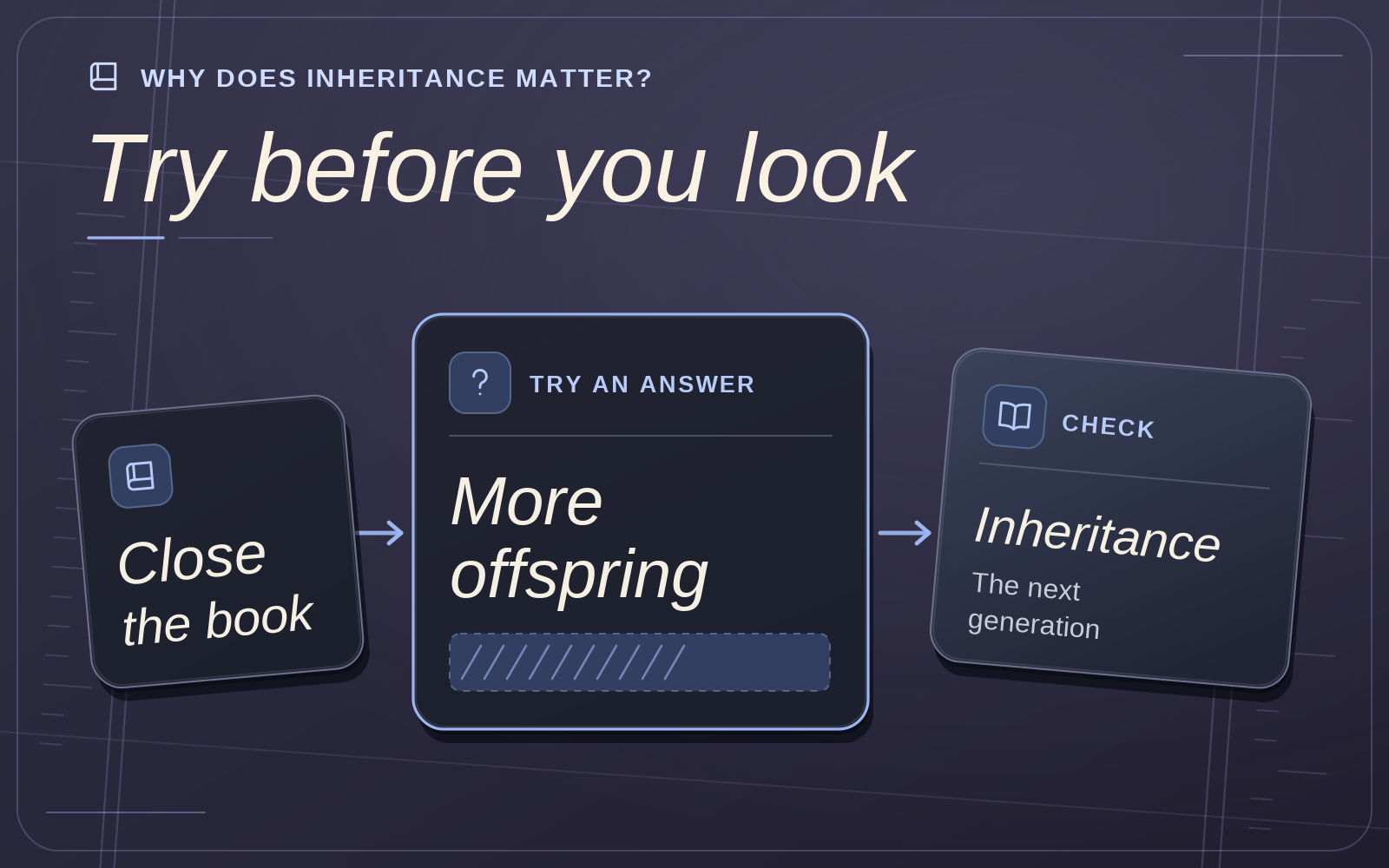
If you’re continuing the section, give yesterday’s question a quick try before you open the book. Read the note if you need to see where you left off.
Sources
Studies and reviews say what was measured. Books and guides are where an example or a method comes from. Videos describe one reader's practice: useful, but not evidence.
Study
Mark A. McDaniel, Daniel C. Howard and Gilles O. Einstein (April 2009). The Read-Recite-Review Study Strategy: Effective and Portable. Psychological Science.
20(4), 516–522. Experiment 1 design, self-paced reading and recall results checked 22 November 2026.
Full paper (opens in a new tab)Book
Mary Wollstonecraft (1792). A Vindication of the Rights of Woman.
Chapter XII. The argument for educating children together checked 22 November 2026.
Read On National Education (opens in a new tab)
Read this with your AI
Opens a new chat with the address of this article and a question ready to send.