What to do with a pile of old Kindle highlights
What should I do with old Kindle highlights?
In short
Open the highlights from one nonfiction book and look at twelve marks at most.
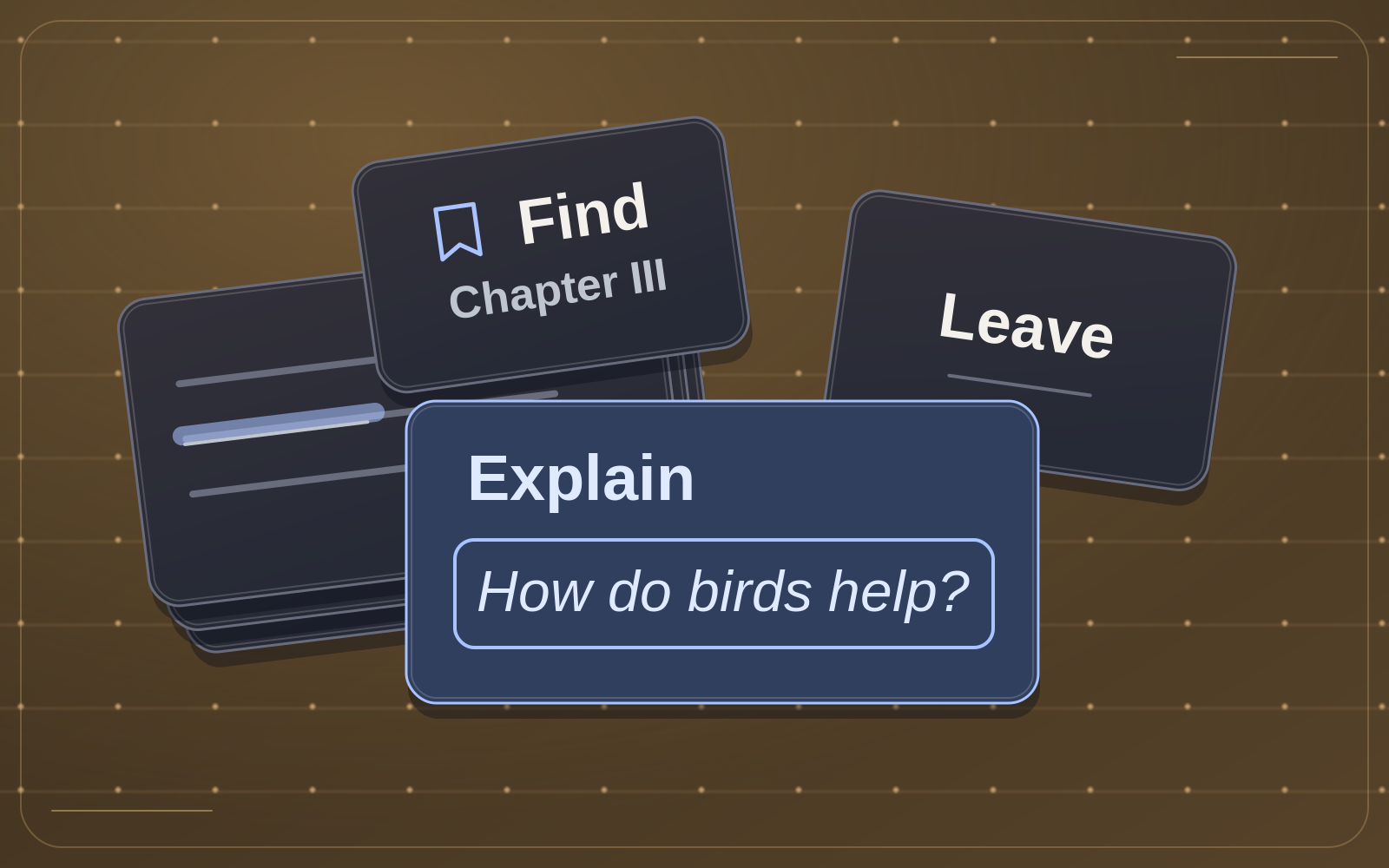
- Keep a chapter or location for a passage you want to find.
- Explain one idea you want to think through.
- Leave the rest where they are.
- Keep the book nearby so you can check the lines around a promising mark.
On this page
Give each highlight one job
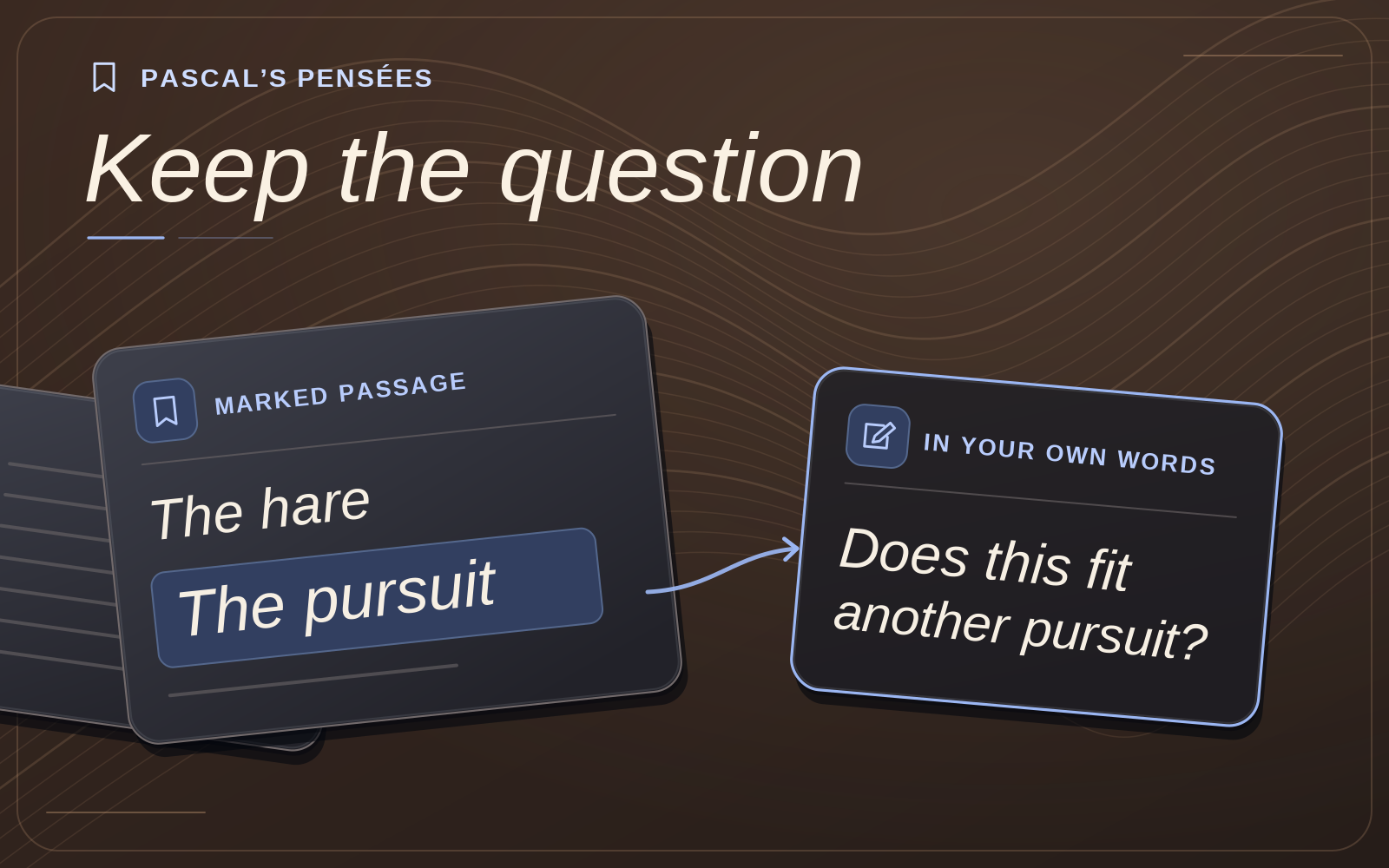
A list of highlights shows which passages you marked. Months later, you may have to open the book to see why you marked one. On the Kindle 11th Generation (2024), you can see a book’s highlights in the Annotation Notebook while reading. Amazon’s Kindle User Guide (opens in a new tab). Choose a book you have a reason to look at now. Write a question at the top of a notebook page. It could be something you want to understand about the book or a decision you think it could help with.
| Job | What to do |
|---|---|
| Find | Keep the title and chapter or Kindle location, with a few words on what you expect to find there. Use this for definitions, quotations or facts you may need to check. |
| Explain | Open the passage and read the lines around it. Close the book or hide the passage, then write the point and the author’s reason in your own words. Reopen it and check one important detail. |
| Leave | Keep the mark in the book. If it answers a different question, repeats a point or meant something only on the day you read it, carry on to the next one. |
If several marks make the same point, keep the one with the clearest reason or example. Save the location beside it. The earlier marks can stay where you left them.
What does that look like in one book?
Suppose you marked passages in chapter III of Charles Darwin’s On the Origin of Species. Your question today is “What does Darwin mean by struggle if nothing is fighting?” Darwin, chapter III, “Struggle for Existence” (opens in a new tab).
| Mark you come across | What you do with it |
|---|---|
| Darwin says he is using struggle in a broad, figurative sense. | Find. Write “Chapter III, opening definition of struggle. Check how Darwin includes survival and leaving offspring.” |
| Darwin describes birds spreading mistletoe seeds. | Explain. Write “Mistletoe depends on birds to carry its seeds to other places. Darwin includes that dependence in his idea of struggle because it affects whether the plant leaves offspring.” Then check the passage for the distinction between relying on birds and competing with other plants for their attention. |
| Darwin describes two animals competing for scarce food. | Leave. The mark still serves as an example of direct competition. The birds answer the question you brought to this pass. |
The chapter marker points you back to Darwin’s definition, and the second note gives you a reason he uses the term broadly. A question to come back to might be “What makes mistletoe an example of struggle in Darwin’s sense?” Keep it above the explanation so you can cover the answer and try it first.
What can the highlighting research tell you?
Robert Fowler and Anne Barker had undergraduates read with different kinds of highlighting or with unmarked text. They took a memory test a week after reading. The groups’ overall memory scores did not differ reliably. A closer look at the answers suggested that students retained some marked material better, particularly when they had made the marks themselves. That study tested memory for assigned text. The job here is to decide what a particular mark can help you do now. Fowler and Barker, 1974 (opens in a new tab).
Try it tonight in five minutes
- Minute one. Open one book’s highlights and write one question that gives you a reason to look through them.
- Minutes two and three. Scan up to twelve marks. Jot find, explain or leave beside a short clue for each one you reach. Give yourself one explain mark at most.
- Minute four. Read around that mark. Hide the passage, write the point and its reason, then reopen it to check. If no mark earned an explanation, give one useful passage a locator and a few words of context.
- Minute five. Add the chapter or location to anything you copied into the notebook. Put a question above the explanation if you want to try recalling it tomorrow. Stop at the timer.
A notebook gives you a place for that new explanation. In Pensaya, you can save a book note, then write your own explanation of one idea. Start by writing out the one highlight you chose to explain.
If your note skips part of the author’s reason, try the Feynman technique on that passage.
Questions readers ask
What if I can’t get back to the passage?
Keep the title and any location you have. Write the question you wanted the passage to answer. Wait until you can read the surrounding lines before you attribute an explanation to the author.
Should I delete highlights I decide to leave?
Leave them in the book if you’re unsure. Give yourself five minutes to sort a few marks, then stop. You can choose a different batch when you have a reason to go back.
Sources
Studies and reviews say what was measured. Books and guides are where an example or a method comes from. Videos describe one reader's practice: useful, but not evidence.
Study
Robert L. Fowler and Anne S. Barker (June 1974). Effectiveness of Highlighting for Retention of Text Material. Journal of Applied Psychology.
59(3), 358–364. The abstract’s one-week scores and marked material comparison checked 22 November 2026.
Publisher preview (opens in a new tab)Guide
Amazon (2024). Kindle User Guide, 11th Generation (2024).
Notes and highlights and Navigating a book. Checked 22 November 2026.
Amazon’s Kindle User Guide (opens in a new tab)Book
Charles Darwin (1859). On the Origin of Species.
Chapter III, pp. 62–63. The definition and its examples checked 22 November 2026.
Darwin Online, first edition (opens in a new tab)
Read this with your AI
Opens a new chat with the address of this article and a question ready to send.